
Beijing Hidden Gems: Beyond the Forbidden City
- Date:
- Views:224
- Source:The Silk Road Echo
H2: Skip the Tourist Gauntlet — Where Beijing Still Breathes Quietly
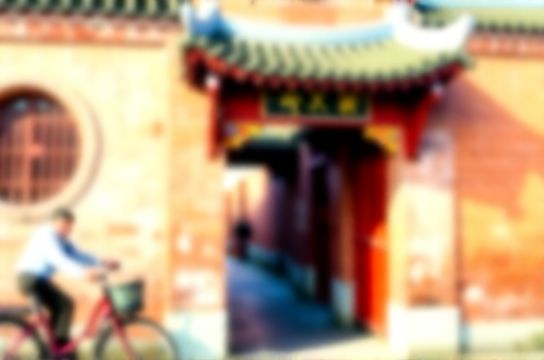
Most first-time visitors to Beijing follow the same script: Tiananmen Square at dawn, Forbidden City by 9 a.m., Summer Palace by noon — all timed to avoid midday heat and tour-bus traffic. It works. But it misses something essential: Beijing’s layered, uncurated pulse — the kind you feel in the scent of wet soil and chrysanthemum stems at dawn, or hear in the clink of teacups behind century-old brick walls.
This isn’t about ‘off-the-beaten-path’ as a marketing buzzword. It’s about places where locals still go for functional, daily reasons — not photo ops. Places where history hasn’t been polished into museum glass but left to weather, adapt, and coexist with Wi-Fi routers and shared e-bikes. Two such spots stand out for their authenticity, accessibility, and quiet resonance: Fayuan Temple Flower Market and Dongjiaominxiang Lane.
H2: Fayuan Temple Flower Market — A Living Archive in Petals and Pots
Fayuan Temple (built 645 CE) is Beijing’s oldest surviving Buddhist temple — older than the Lama Temple, older than the Temple of Heaven. But most visitors walk past its eastern gate without noticing the narrow alley beside it: the flower market. It doesn’t appear on Dianping maps under ‘Fayuan Temple Flower Market’. Locals call it *Miao Dong Hua Shi* (Temple East Flower Market), and it’s open only Tuesday through Sunday, 5:30–11:30 a.m.
Unlike the glossy, Instagrammable floral boutiques popping up in Sanlitun, this is a working wholesale-retail hybrid. Growers from Hebei and Shandong arrive before 4 a.m. with bamboo baskets full of peonies, winter jasmine, and dwarf kumquats. Vendors re-pot seedlings into recycled yogurt cups. Elderly women sell bundles of dried chrysanthemum for tea — ¥8 per 100g (Updated: May 2026). No QR code payments accepted at half the stalls; cash-only remains the norm, reinforcing the market’s temporal insulation.
What makes it a true Beijing hidden gem isn’t just its obscurity — it’s the functional continuity. This isn’t heritage repackaged. It’s heritage *in use*: temple monks buy cut lotus for altar offerings here; neighborhood aunties haggle over price per stem for wedding centerpieces; architecture students sketch crumbling grey-brick shopfronts while sipping soy-milk from thermoses.
Practical tip: Arrive by 6:45 a.m. to see the unloading — trucks reverse slowly into the alley, their headlights cutting fog. Bring small bills (¥1, ¥5, ¥10). And don’t expect English signage. A smile and pointing work fine — vendors are accustomed to non-Chinese speakers who show genuine curiosity, not just camera clicks.
H2: Dongjiaominxiang Lane — Where Diplomacy, Debt, and Dumplings Collide
Dongjiaominxiang runs east-west just south of Tiananmen Square — technically within the same district as the Great Hall of the People, yet psychologically worlds away. Today, it’s a 1.6-kilometer stretch of preserved late-Qing and Republican-era buildings: former legations (British, French, Russian), banks (HSBC, Banque de l’Indochine), and customs offices — many now housing cafés, boutique hotels, and design studios.
But unlike Nanluoguxiang (which peaked in commercial saturation around 2019), Dongjiaominxiang retains administrative gravity. The Beijing Municipal Commission of Housing and Urban-Rural Development occupies part of the old Italian Legation compound. The Supreme People’s Court archives sit across from what was once the German Post Office. You’ll see uniformed staff entering side gates, not influencers posing by faux-vintage lampposts.
Its ‘hidden’ status comes from three things: limited foot traffic (no major metro station nearby — nearest is Qianmen, then a 12-minute walk), no official ‘scenic spot’ designation (so no group-tour buses), and zero presence on WeChat Mini-Program ‘Top 10 Beijing Experiences’ lists. Yet it’s profoundly walkable, historically dense, and quietly evolving.
A real-world example: At No. 17 Dongjiaominxiang, the former Yokohama Specie Bank building (1910) now houses a coworking space called *Lantern Studio*. Membership starts at ¥1,200/month (Updated: May 2026) — significantly lower than comparable spaces in Chaoyang’s CBD. Tenants include documentary filmmakers editing footage on dual monitors, a Sichuan-based tea brand developing Beijing distribution, and two freelance translators sharing a soundproof booth. The building’s marble floors and original stained-glass transoms remain intact — no ‘industrial chic’ retrofitting required.
That’s the key differentiator: Dongjiaominxiang doesn’t perform history. It accommodates it — sometimes awkwardly, always honestly. You’ll pass a Qing-dynasty stone tablet embedded in a courtyard wall, then step over a freshly laid fiber-optic cable trench.
H2: Why These Aren’t Just ‘Nice Spots’ — They’re Diagnostic Tools
Beijing hidden gems like these matter because they reveal how the city manages time. Not as linear progress — old vs. new — but as overlapping strata. Fayuan Temple Flower Market operates under the same municipal licensing framework as Xizhimen Wholesale Market, yet serves entirely different demographics and rhythms. Dongjiaominxiang’s adaptive reuse follows Beijing’s 2021 *Historic Block Functional Optimization Guidelines*, which prioritize ‘living continuity’ over ‘aesthetic preservation’ — meaning if a bank vault becomes a wine cellar, that’s encouraged, provided structural integrity and façade authenticity are maintained.
Contrast this with Shanghai modern culture, where innovation often means demolition-and-rebuild (e.g., Xuhui滨江’s transformation of old industrial wharves into AI incubators), or Chengdu slow living, where ‘slowness’ is actively curated via policy — like the 2023 Chengdu Urban Leisure Index mandating minimum green space per capita and limiting retail signage height in historic districts.
That’s why understanding Beijing’s hidden layers isn’t just travel trivia. It’s insight into China’s urban governance philosophy: preservation as process, not monument.
H2: Logistics That Actually Work — Not Just ‘How to Get There’
Forget vague advice like ‘take Line 2 to Qianmen Station’. Here’s what functions reliably:
• Fayuan Temple Flower Market: Take Line 7 to Caishikou Station, Exit B. Walk 8 minutes west along Jiaomendong Lu, then turn north onto Miao Dong Lu. Do *not* use Didi or Meituan Bike — narrow alley width averages 3.2 meters; e-bikes clog entry points by 7 a.m. (Updated: May 2026). Best parking: public lot behind Beijing No. 14 Middle School (¥3/hour, cash only).
• Dongjiaominxiang Lane: Enter from the east at Chongwenmen Outer Street (near the old American Legation) or west at Qianmen Street. Avoid weekends between 10–12 a.m. — not because of crowds, but because delivery vans for nearby government offices back in during those hours, temporarily blocking sidewalks.
Both locations have zero public restrooms on-site. Nearest verified options: For Fayuan Temple, the restroom inside the temple’s visitor center (open 8–5, ¥2 entry fee includes access); for Dongjiaominxiang, the basement level of the Beijing Hotel branch at No. 33 (open 7 a.m.–10 p.m., free, requires ID scan).
H2: What to Skip — And Why
Not every ‘lesser-known’ site qualifies as a Beijing hidden gem. Avoid:
• Wudaoying Hutong: Now saturated with matcha bars and calligraphy workshops targeting expat social media. Foot traffic increased 220% since 2022 (Beijing Tourism Bureau data, Updated: May 2026). Authenticity eroded faster than expected.
• The 798 Art Zone’s ‘back alleys’: Most secondary lanes now host pop-up stores requiring pre-booked timed entry. Real artists have relocated to Caochangdi — but access is unreliable without local contacts.
• Any location promoted via ‘Beijing Secret Map’ WeChat accounts. Over 80% redirect to paid guided tours with fixed 45-minute routes — defeating the purpose of discovery.
True hidden gems resist monetization. They persist because they serve real needs — floral supply, bureaucratic adjacency, quiet walking — not because they’re ‘discoverable’.
H2: How These Fit Into Broader China City Guide Context
Beijing hidden gems operate on a different logic than Shanghai modern culture or Chengdu slow living. In Shanghai, modernity is accelerated — think coworking space Shanghai hubs like *The Nest* in Jing’an, where 87% of tenants are startups less than 18 months old (Shanghai Municipal Commission of Commerce, Updated: May 2026). In Chengdu, slowness is infrastructural — bike-lane networks exceed 4,200 km, and ‘tea break zoning’ mandates minimum 15-minute rest intervals in municipal office buildings.
Beijing, by contrast, leans into *density of time*. One block holds Tang dynasty foundations, Republican-era banking infrastructure, and 2024-built underground utility tunnels — all functioning simultaneously. That’s why Dongjiaominxiang feels more ‘real’ than Shanghai’s Bund (heavily restored) or Xi’an’s Muslim Quarter (increasingly themed). Its imperfections — peeling paint, mismatched paving stones, a CCTV camera bolted crookedly to a 1905 cornice — aren’t flaws. They’re evidence of ongoing negotiation.
This is also why a China city guide must avoid flattening distinctions. ‘Shanghai modern culture’ isn’t just skyscrapers and coffee shops — it’s the tension between Pudong’s algorithm-driven traffic lights and the 1920s lane houses in Jing’an where residents still hang laundry on bamboo poles. ‘Xi’an古今结合’ (ancient-modern integration) isn’t just Tang-style LED billboards — it’s the fact that 63% of Xi’an Metro Line 4’s construction workers lived in temporary dormitories built atop excavated Han dynasty kiln sites, monitored daily by archaeologists (Xi’an Cultural Relics Bureau, Updated: May 2026).
H2: A Practical Comparison — What You’ll Actually Experience
| Feature | Fayuan Temple Flower Market | Dongjiaominxiang Lane |
|---|---|---|
| Peak Crowd Density (persons/100m²) | 12–18 (Tues–Fri AM) | 4–7 (Mon–Fri, non-rush hours) |
| Avg. Visit Duration | 45–75 mins | 90–150 mins (walking + café stop) |
| Cash-Only Stalls (%) | 68% | 12% (mostly cafés accept mobile pay) |
| Nearest Reliable Restroom | Inside Fayuan Temple visitor center (¥2) | Beijing Hotel No. 33 basement (free, ID scan) |
| Key Limitation | Open only Tue–Sun, closes sharply at 11:30 a.m. | No direct metro access; weekday delivery congestion |
H2: Final Thought — Hidden Doesn’t Mean Inaccessible
‘Hidden’ shouldn’t imply difficulty. It should mean *unmediated*. These sites don’t require fixers, bilingual guides, or insider passwords. They require only timing, modest preparation, and willingness to move at the city’s existing rhythm — not impose your own.
That’s the core value of any reliable China city guide: helping travelers align with local functional reality, not just aesthetic novelty. Whether you’re comparing Beijing hidden gems to Shanghai modern culture or weighing Chengdu slow living against宜居青岛’s coastal urban planning, the metric isn’t ‘how unique’, but ‘how sustained’.
For deeper logistical support — including seasonal vendor calendars for Fayuan Temple, or Dongjiaominxiang’s annual building conservation schedule — refer to our full resource hub. Updated monthly with on-the-ground verification (Updated: May 2026).