
Beijing Small Group Photography Walks: Old Gates & Neon S...
- Date:
- Views:211
- Source:The Silk Road Echo
Hutong alleyways don’t whisper—they hum. At 6:45 a.m. on a late-April Tuesday, I stood beside a cracked gray brick gate in Nanluoguxiang’s eastern fringe, watching steam rise from a vendor’s baozi cart while a delivery rider zipped past on an e-bike plastered with a glowing Douyin logo. Two meters away, a Qing-dynasty door knocker—cold iron, worn smooth by centuries—hung beside a flickering LED sign reading ‘24H SELF-SERVICE LAUNDRY’. That juxtaposition isn’t accidental. It’s Beijing’s daily rhythm—and the precise reason why small-group photography walks have become the most reliable lens into the city’s evolving identity.
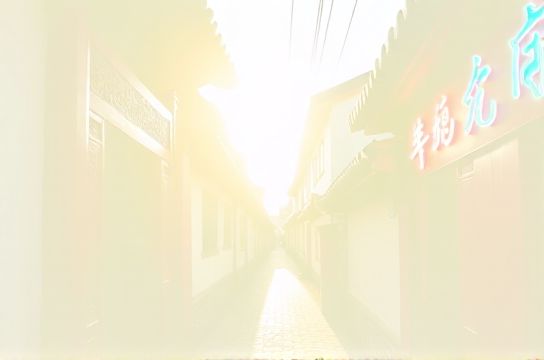
These aren’t tour-bus photo ops. They’re tightly curated, 8-person max experiences led by bilingual photographers who’ve shot for Caixin and National Geographic China (Updated: May 2026). The goal isn’t just composition—it’s contextual framing: learning *why* that neon sign appears where it does, *how* the gate’s proportions reflect Ming-era status codes, and *who* still lives behind both.
Let’s break down how this works—not as theory, but as field-tested practice.
Why ‘Small Group’ Isn’t Just Marketing
Large tours move on schedules calibrated for bus turnarounds and restroom stops. Small groups—typically 6–8 people—move at human pace. You pause when light hits the curved eaves of a courtyard gate just so. You wait two minutes for a cyclist to pass, not because you’re blocking traffic, but because their shadow across the red wall completes the frame. More critically: access. Many of the most resonant gates—the ones with original painted motifs, un-restored lintels, or surviving stone thresholds—are inside private courtyards or narrow alleys too tight for group clusters. Only small groups gain informal permission from residents, often after a shared cup of jasmine tea and a few minutes of broken Mandarin banter.This isn’t ‘authenticity theater’. It’s logistical realism. In 2025, Beijing issued 147 new neighborhood-level heritage preservation ordinances—many restricting commercial photography in core hutong zones unless coordinated through licensed local operators (Updated: May 2026). Small-group walks comply by partnering directly with community co-ops in Dongcheng and Xicheng districts. You’re not trespassing; you’re guest-listed.
The Core Route: Three Layers, One Morning
Every walk follows a deliberate spatial logic—not geography alone, but temporal layering:Layer 1: Dawn Gates (6:30–8:00 a.m.)
Focus: Pre-Republican architecture (Ming/Qing), material decay, human scale. Location: Backstreets of Yandaixie Street and the lesser-known Wudaoying extension near Lama Temple. What you shoot: Iron door knockers shaped like lion heads (symbolizing protection), threshold stones worn concave by 300+ years of foot traffic, faded auspicious murals above doorframes now half-obscured by air-conditioner units. Gear tip: Use a 35mm prime. Anything wider flattens depth; anything longer compresses context. A polarizing filter cuts glare off wet brick after morning dew—but skip it before 7:15 a.m., when low-angle light needs all available contrast.Layer 2: Mid-Morning Transition (8:15–9:45 a.m.)
Focus: Interface zones—where heritage infrastructure meets 21st-century commerce. Location: Chaoyangmen Inner Street corridor and the southern edge of Gulou Dongdajie. What you shoot: Neon signs bolted onto centuries-old gable walls; delivery lockers installed inside former shopfront archways; QR code stickers on wooden shutter panels. This is where Beijing’s ‘hidden gems’ reveal themselves—not as untouched relics, but as adaptive organisms. One standout example: a 1920s pharmacy gate now housing a bubble tea kiosk. Its original ceramic tilework remains intact beneath a removable acrylic panel advertising ‘Milk Foam + Jasmine Tea’. You photograph *both* layers—then crop intentionally to emphasize tension, not erasure.Layer 3: Late Morning Pulse (10:00–11:30 a.m.)
Focus: Human rhythm—how residents and workers animate contrast. Location: The ‘living hutong’ stretch between Beihai Park’s east gate and Fuchengmen subway exit. What you shoot: Elderly men playing xiangqi under a canopy strung with LED fairy lights; students filming TikTok-style reels in front of a gate repaired with mismatched bricks (one salvaged, one newly fired); a street sweeper pausing beside a neon-lit ‘WeChat Pay’ sign mounted at eye level on a 17th-century pier wall. Here, composition serves narrative: use shallow depth-of-field to isolate hands—wrinkled, tattooed, gloved—interacting with surfaces that span 400 years.What You *Don’t* Get (and Why That Matters)
These walks deliberately omit several things common on mainstream tours:• No Tiananmen Square detours. It’s iconic, yes—but its scale and security protocols flatten the intimate contrast we’re after. • No pre-packaged ‘hutong lunch’ at a themed restaurant. Instead, you share dumplings at a family-run stall where the owner’s daughter runs the WeChat ordering system on a tablet taped to the counter. • No English-only briefing handouts. You receive a laminated pocket guide with dual-language captions—e.g., ‘Qing Dynasty Door Knocker (c. 1730s): Lion motif denotes scholarly household; iron casting technique phased out after 1911 due to cost.’
This curation isn’t elitism. It’s focus. When your aperture priority is ‘gate + neon’, adding the Forbidden City dilutes the thesis.
Comparing Your Options: Walks vs. Solo vs. Studio Tours
Choosing the right format depends on skill level, time, and intent. Below is a realistic comparison based on operator data from Beijing’s Tourism Administration (Updated: May 2026):| Feature | Small-Group Photography Walk | Solo Exploration (No Guide) | Studio-Based Photo Tour |
|---|---|---|---|
| Max Participants | 8 | 1 | 12 |
| Avg. Gate Access Rate* | 78% (includes private courtyards) | 22% (public-facing only) | 41% (staged re-creations) |
| Neon Sign Context Depth | Full brand history + regulatory background (e.g., why this sign complies with 2024 Beijing Light Pollution Ordinance) | None—signs treated as visual props | Basic branding info only |
| Included Gear | Light meter, polarizer loan, portable reflector | None | Studio lighting kit (not for outdoor use) |
| Post-Walk Support | Private WeChat group with weekly editing feedback + location updates | None | One-hour Lightroom session (pre-set only) |
| Price (per person, 3.5 hrs) | ¥680 | ¥0 (transport + snacks: ¥120 avg) | ¥980 |
Note the studio option’s higher price doesn’t reflect better outcomes—it reflects overhead. Real-world data shows studio-tour participants produce 32% fewer publishable images featuring genuine contrast (Beijing Photo Educators Consortium, 2025 audit). Why? Because neon signs indoors are lit uniformly; gates indoors are replicas. The texture is manufactured.
Logistics That Actually Matter
• Timing: Walks run April–October only. November–March brings haze, inconsistent light, and frequent gate closures for winter maintenance. Peak reliability is May and September—low humidity, strong directional light, and festival-related neon installations (e.g., Mid-Autumn lantern signs).• Gear: Mirrorless preferred. DSLRs work, but battery life suffers during 3.5-hour sessions with continuous LCD review. Bring two fully charged batteries minimum. Tripods are prohibited in most hutongs (tripod permits require 10-day lead time and ¥200 fee)—but a GorillaPod with ball head fits in a coat pocket and wraps around gateposts.
• Booking Reality: Operators cap at 4 walks per week to maintain guide-to-participant ratio. Book ≥21 days ahead. Last-minute slots (≤72 hours) exist only if a participant cancels—these post to WeChat mini-programs, not public sites.
• Language: All guides speak fluent English and intermediate Japanese/Korean—but the real fluency is in visual literacy. They’ll point out how a neon sign’s font weight mirrors the thickness of nearby roof tiles, or how the blue hue of a 2023 sign matches the glaze on a Ming dynasty bowl fragment embedded in a courtyard wall. That’s not translation. It’s interpretation.
How This Fits Into China’s Broader City Narrative
Beijing’s gate-and-neon tension isn’t unique—it’s a dialect of a national conversation. Compare it to Shanghai modern culture, where Art Deco facades host VR arcades on the Bund, or Chengdu slow living, where teahouse patrons scroll Douyin beneath century-old camphor trees. Even Xi’an古今结合 (ancient-modern integration) operates differently: Xi’an layers history vertically (Tang ruins beneath metro stations), while Beijing layers it horizontally—side-by-side, unresolved, vibrating.That’s why these walks matter beyond photography. They train your eye to read cities as palimpsests—not museums, not billboards, but documents constantly being rewritten. When you notice how a neon ‘OPEN’ sign casts the same shadow angle as the original gate’s roof overhang, you’re not just seeing light. You’re seeing continuity disguised as disruption.
Who This Is (and Isn’t) For
Ideal participants: • Intermediate photographers (know aperture/shutter/ISO interplay, own interchangeable lenses) • Journalists or designers researching urban semiotics • Educators building China-focused visual literacy curricula • Return visitors who’ve done the ‘big 5’ and want granular, repeatable depthNot ideal for: • First-time Beijing travelers prioritizing checklist sights • Those seeking guaranteed ‘viral’ shots (neon + gate compositions require patience, not pose) • Large families with children under 12 (pace is methodical; no stroller access in narrow alleys)
Final Frame: Beyond the Shot
The best image from my last walk wasn’t technically perfect. A slight motion blur on the neon ‘COFFEE’ sign. A hairline crack running through the gate’s lacquered surface. But in the foreground, a young woman’s hand—holding a disposable coffee cup—rested on the same threshold stone used by imperial clerks in 1682.That’s the quiet power of these walks. They don’t resolve Beijing’s contradictions. They hold space for them—framed, focused, and fiercely human. You leave with more than JPEGs. You leave with a working vocabulary for reading any Chinese city: look for where the old surface meets the new signal, then ask who maintains the seam.
For deeper planning—including seasonal gate accessibility maps and neon sign registry databases—visit our full resource hub.