
Social Phenomena China Behind the Mask of Modernization
- Date:
- Views:179
- Source:The Silk Road Echo
In the shadow of skyscrapers and high-speed rail networks, modern China presents a dazzling facade of progress. Yet beneath this polished surface lies a complex web of social phenomena that reveal the true heartbeat of the nation. From the urban-rural divide to the pressures of 'involution', China's transformation isn't just economic—it's deeply human.
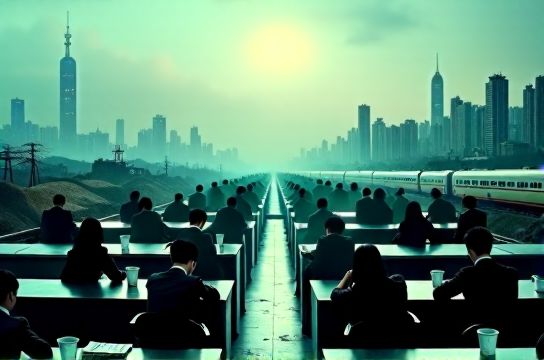
Take a walk through Beijing’s tech hubs, and you’ll hear buzzwords like 'AI' and 'smart cities.' But step into a village in Gansu Province, and life moves to a different rhythm—one shaped by migration, aging populations, and limited access to healthcare. This contrast isn’t accidental. According to the National Bureau of Statistics, urban residents earn an average of ¥70,000 annually, while rural incomes hover around ¥20,000—a gap that fuels both ambition and anxiety.
One of the most talked-about social trends is neijuan, or 'involution'—a term describing relentless competition with little real gain. Students study 14-hour days to ace exams; young professionals burn out chasing promotions. A 2023 survey by Zhaopin.com found that over 65% of white-collar workers feel 'chronically exhausted,' with nearly half considering leaving their jobs for lower-stress roles.
Yet, amidst the pressure, there’s resilience. The rise of 'lying flat' (tanping) culture reflects a quiet rebellion—millennials opting out of the rat race, choosing minimalism over materialism. It’s not laziness; it’s self-preservation.
Gender dynamics are shifting too. More women than ever are pursuing higher education and leadership roles. However, traditional expectations persist. The table below highlights key social indicators:
| Indicator | Urban | Rural |
|---|---|---|
| Median Household Income (¥) | 70,000 | 20,000 |
| University Enrollment Rate (%) | 75 | 38 |
| Women in Management (%) | 32 | 18 |
| Average Workweek (hours) | 48 | 52 |
The digital revolution has also reshaped social behavior. Over 1 billion people use WeChat daily—not just for messaging, but for banking, shopping, and even government services. This hyper-connectivity blurs the line between public and private life, creating new forms of community and control.
What does all this mean for outsiders? To understand China, don’t just look at GDP growth. Look at the student cramming at midnight, the migrant worker sending money home, the woman negotiating career and family in a patriarchal society. These stories form the real narrative behind the mask of modernization.
In the end, China’s greatest challenge isn’t infrastructure—it’s balance. Balancing growth with well-being, tradition with innovation, ambition with peace. And as the world watches, one thing is clear: the soul of China beats not in its bullet trains, but in the lives of its people.