
Inside China's Social Phenomena From a Local Viewpoint
- Date:
- Views:255
- Source:The Silk Road Echo
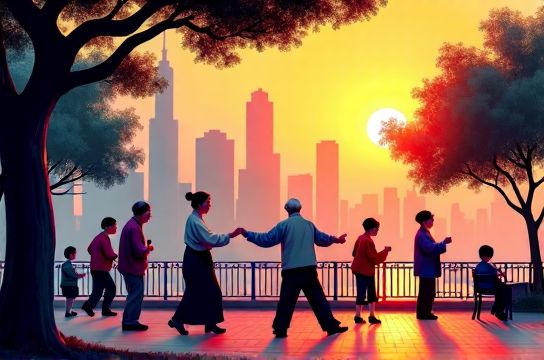
If you've ever strolled through a Chinese city at 6 a.m., you’ve probably seen it: clusters of aunties in matching tracksuits, dancing in perfect sync to upbeat pop tunes in the park. It’s not just exercise—it’s social glue. Welcome to the fascinating world of China’s everyday social phenomena, where tradition dances with modernity and collective rhythm shapes individual lives.
From square dancing to face-saving culture, from digital red packet fever to the pressure-cooker of the gaokao (college entrance exam), Chinese society operates on a unique blend of ancient values and hyper-modern tech. Let’s peel back the layers—with data, wit, and a local’s eye.
The Rhythm of the Masses: Square Dancing Nation
You can’t talk about Chinese urban life without mentioning square dancing. Over 100 million middle-aged women participate nationwide, turning public spaces into impromptu stages. It’s more than fitness—it’s community, identity, and sometimes, controversy.
Here’s a snapshot of its social impact:
| Aspect | Data/Insight |
|---|---|
| Estimated Participants | 120 million (2023, National Bureau of Statistics) |
| Average Age Group | 50–65 years |
| Peak Activity Time | 6:00–7:30 AM & 7:00–9:00 PM |
| Top Cities | Beijing, Chengdu, Guangzhou |
| Common Complaints | Noise (43%), space disputes (31%) |
Yes, there’s drama. In 2022, a clash in Hangzhou made headlines when residents hired a drone to drop noise-canceling earbuds on dancers. But beneath the humor lies a deeper truth: in a fast-paced, urbanizing society, these groups offer emotional support and belonging.
Face, Fate, and WeChat: The Currency of 'Guanxi'
'Face' (mianzi) isn’t vanity—it’s social capital. Losing face? A serious blow. Saving face for others? A moral duty. This unspoken rule governs everything from business deals to family dinners.
And then there’s guanxi—the web of personal connections that can open doors faster than any resume. Need a hospital bed during flu season? A cousin’s friend’s neighbor might just help.
But here’s the twist: digital platforms like WeChat have supercharged guanxi. Red packets (hongbao) aren’t just for Lunar New Year—they’re sent during weddings, birthdays, even group chats to keep harmony. In 2023, over 800 million users sent digital red packets on WeChat during春节 (Spring Festival), totaling $40 billion in virtual gifts.
Education or Endurance Test? The Gaokao Grind
If square dancing is the pulse of leisure, the gaokao is the heartbeat of ambition. This two-day exam determines university fate—and by extension, career and social status. Students often study 12+ hours a day for years.
Why so intense? Because top universities like Tsinghua and Peking University admit less than 1% of test-takers. It’s not just academic—it’s economic mobility.
Consider this: rural students make up only 18% of elite university enrollments despite being ~40% of the population. The gap reflects deep regional inequalities.
So, What’s the Takeaway?
China’s social fabric isn’t just about rules—it’s about rhythm. Whether it’s the synchronized steps of dancers, the silent exchange of face, or the high-stakes race of education, these patterns reveal a culture that values harmony, hierarchy, and hope.
To outsiders, it may seem chaotic or extreme. But to locals? It’s just life—loud, proud, and deeply human.