
Youth Lifestyle and Values in Modern Chinese Society
- Date:
- Views:231
- Source:The Silk Road Echo
In today’s fast-paced China, the youth aren’t just growing up—they’re redefining what it means to live, work, and dream. Born into a digital era and raised amid economic boom, Gen Z and Millennials in China are shaping a culture that blends tradition with tech, ambition with balance, and individuality with social responsibility.
The New Normal: What Drives China’s Youth?
Gone are the days when success meant a stable government job or moving to Beijing for fame. Today’s young Chinese prioritize mental well-being, personal fulfillment, and flexible lifestyles. A 2023 survey by China Youth Daily found that over 68% of urban youth aged 18–35 would trade a high salary for better work-life balance.
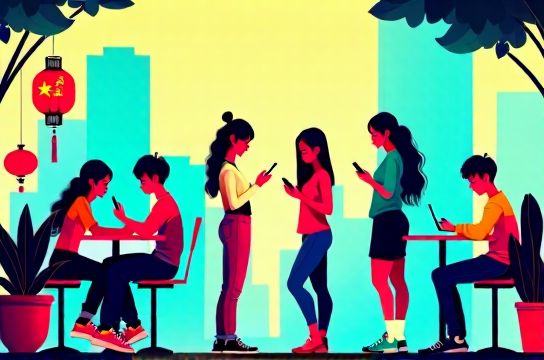
They’re also digital natives. With smartphone penetration at 97% among under-35s (CNNIC, 2023), platforms like Xiaohongshu, Douyin, and Bilibili aren’t just for entertainment—they’re lifestyle guides, job boards, and identity hubs.
Values That Define a Generation
Contrary to stereotypes, today’s youth aren’t just chasing luxury brands. They value authenticity. Take 'guochao' (国潮)—the pride in domestic brands like Li-Ning, Huawei, and White Rabbit. This cultural wave isn’t just patriotism; it’s about reclaiming identity in a globalized world.
Mental health awareness is rising too. Nearly 40% of university students report anxiety symptoms (Peking University, 2022), pushing schools and employers to adopt wellness programs. The taboo is breaking—talking about stress is now a sign of strength, not weakness.
Lifestyle Snapshot: Urban vs. Rural Youth
Life looks different depending on where you grow up. While city youth debate between 'lying flat' (躺平) and 'internal卷 (involution)', rural youth are often striving harder for upward mobility.
| Factor | Urban Youth (18–35) | Rural Youth (18–35) |
|---|---|---|
| Monthly Income (Avg.) | ¥8,500 | ¥4,200 |
| Smartphone Usage (Daily) | 5.2 hours | 4.1 hours |
| Top Career Goal | Creative Freedom | Financial Stability |
| Mental Health Support Access | 62% | 28% |
Work, Hustle, and the 'Anti-Hustle' Movement
'Involution'—endless competition for minimal gain—has become a buzzword. Young professionals feel trapped in 996 work cultures (9 AM–9 PM, 6 days/week). In response, many are embracing 'tang ping' or 'lying flat'—opting out of the rat race to pursue passions, travel, or freelance gigs.
But it’s not laziness—it’s recalibration. Freelancing is booming: over 12 million young Chinese now work independently, from content creation to e-commerce dropshipping.
Love, Family, and Future Plans
Marriage rates are dropping. In 2023, the average age for first marriage hit 28.7 for women and 30.2 for men in cities. Many youth delay marriage due to career focus or housing costs—average home prices in Shanghai are 45 times the annual income.
Yet, they’re not rejecting family life entirely. Instead, they seek partnerships based on equality and emotional connection, not obligation.
Final Thoughts: A Generation in Transition
China’s youth are navigating a complex landscape—balancing pressure with purpose, tradition with innovation. They’re not rebelling; they’re reimagining. And as they do, they’re not just changing their lives—they’re reshaping society.
Understanding them isn’t just sociological curiosity—it’s essential for educators, employers, and policymakers. Because the future? It’s already being lived by those under 35.