
Social Phenomena China Beyond the Surface Realities
- Date:
- Views:192
- Source:The Silk Road Echo
When you think of China, what comes to mind? Skyscrapers in Shanghai? The Great Wall? Or maybe viral TikTok dances and 5G dominance? While these snapshots are real, they only scratch the surface. To truly understand China's social phenomena, we need to dig deeper—into the quiet revolutions happening in villages, classrooms, and smartphone screens across the world’s most populous nation.
The Digital Pulse: How Super Apps Shape Daily Life
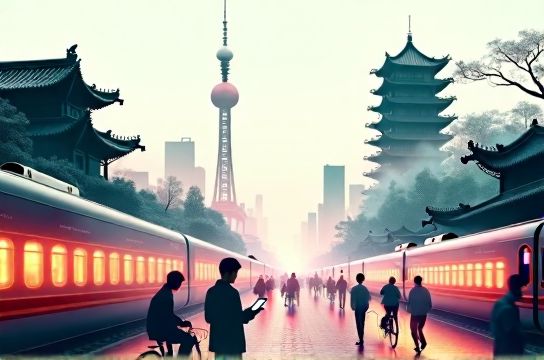
In China, your phone isn’t just a device—it’s your wallet, ID, therapist, and social hub. Over 980 million internet users (as of 2023) rely on super apps like WeChat and Alipay for nearly everything. Imagine scanning a QR code to pay for street food, book a doctor, and check your carbon footprint—all in under 10 seconds.
| App | Monthly Active Users (Millions) | Key Functions |
|---|---|---|
| 1.34 billion | Messaging, payments, mini-programs, social media | |
| Alipay | 1.0 billion | Digital payments, wealth management, credit scoring |
| Douyin (TikTok China) | 780 million | Short videos, e-commerce, live streaming |
This isn’t just convenience—it’s a cultural shift. Social credit scores, though still evolving, influence loan approvals and travel privileges. In cities like Hangzhou, AI-powered traffic systems reduce congestion by up to 15%. Technology here doesn’t just assist life; it redefines it.
The Rural-Urban Divide: Dreams on Two Tracks
While first-tier cities glow with neon and innovation, rural China tells another story. Over 500 million people still live outside urban centers, many grappling with limited healthcare and education access. Yet, this gap is narrowing—thanks to e-commerce.
Platforms like Pinduoduo have turned village farmers into online entrepreneurs. One farmer in Yunnan now sells organic mushrooms directly to Shanghai households, boosting income by 300%. Government initiatives like "Digital Villages" aim to bring high-speed internet to 85% of rural areas by 2025.
Youth Culture: Pressured, Creative, and Quietly Resisting
Meet the “Post-90s” and “Post-00s” generations. They’re fluent in memes, obsessed with K-pop, and drowning in academic pressure. The infamous gaokao (college entrance exam) sees over 12 million students compete annually for top universities. Success means prestige; failure feels like social exile.
Yet, a quiet rebellion brews. The “tang ping” (lying flat) movement encourages young people to reject burnout culture. Others embrace “neijuan”—self-exploitation in hyper-competitive environments—only to mock it through satire. It’s a generation torn between tradition and self-worth.
Gender Shifts: Women Rising, But Not There Yet
Urban women are more educated and career-driven than ever. In Beijing and Shenzhen, over 60% of master’s degrees are earned by women. Yet societal expectations linger. The term “leftover women” (shengnu) still haunts unmarried women over 27, despite being a media-invented label.
Still, progress pulses beneath. Female-led startups are rising, and #MeToo echoes in subtle forms—like anonymous forums calling out workplace harassment. Change is slow, but it’s coded into chat groups and coffee shop conversations.
Final Thoughts: Complexity Over Clichés
China’s social landscape isn’t monolithic. It’s a tapestry of contradictions—high-tech and traditional, collective and individual, hopeful and weary. To see beyond the surface, forget the headlines. Look at how a grandmother in Xi’an learns video editing to connect with her grandson, or how a Chengdu student uses AI to preserve dialect poetry.
These aren’t just trends. They’re human stories, unfolding fast, loud, and full of soul.