
Youth Activism in China’s Online Spaces
- Date:
- Views:203
- Source:The Silk Road Echo
In the digital age, youth activism in China has taken on a new form — not through street protests or public demonstrations, but through subtle, creative, and often coded expressions in online spaces. While traditional activism may be limited, Chinese youth are finding innovative ways to voice concerns, challenge norms, and foster community, all within the boundaries of a tightly regulated internet environment.
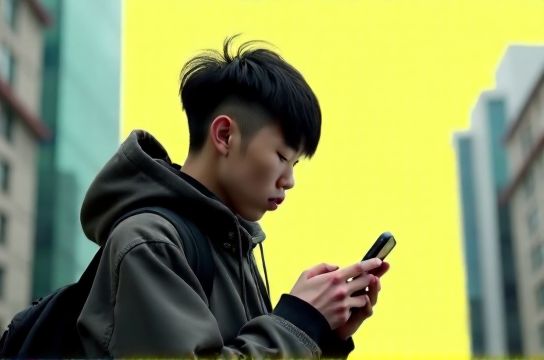
From trending hashtags on Weibo to ironic memes on Douban, young netizens are reshaping what it means to 'speak up.' This isn’t rebellion in the Western sense — it’s resistance with wit, humor, and digital savvy.
The Rise of Digital Expression
China has over 1.05 billion internet users, and nearly 70% are under 39 (CNNIC, 2023). Platforms like Bilibili, Zhihu, and Xiaohongshu have become virtual town squares where issues like mental health, gender equality, and environmental awareness quietly gain traction.
Take the rise of feminist discourse among university students. Though feminist groups have been censored, terms like '女权' (women's rights) evolved into playful homophones like '蜜糖' (honey) or visual metaphors in art posts. On Douban’s now-shuttered Feminist Group, members once shared academic articles using disguised file names — a digital game of cat and mouse.
Data Snapshot: Youth Engagement Across Platforms
| Platform | Primary User Age | Activism-Related Trends (2023) | Notable Example |
|---|---|---|---|
| 18–35 | 4.2M+ posts on #MentalHealthAwareness | Campaign for student well-being after exam stress | |
| Bilibili | 16–30 | 15K+ videos on climate action | Animated explainers on carbon neutrality |
| Xiaohongshu | 18–35 | Trending eco-lifestyle content (+68% YoY) | Zero-waste living guides |
| Zhihu | 20–35 | Top questions: work-life balance, 'involution' | Critique of corporate overtime culture |
The Language of Resistance
Chinese youth aren't shouting — they're whispering in metaphors. The term neijuan (involution) became a viral critique of hyper-competitive education and work culture. Similarly, tanping (lying flat) symbolizes quiet refusal to participate in societal pressure — a passive yet powerful act of dissent.
These concepts spread like wildfire. A 2022 survey found that 62% of urban youth aged 18–28 identified with 'lying flat' to some degree when facing job market stress (Pew Research analysis).
Limitations and Risks
Of course, there are limits. Posts get deleted. Accounts get suspended. In 2023, Weibo banned over 1.2 million pieces of 'illegal or harmful' content monthly — many related to politically sensitive topics.
Yet, the persistence remains. When one hashtag is blocked, another emerges — sometimes nonsensical at first glance, but rich in subtext to those in the know.
Why It Matters
Youth activism in China isn’t about overthrowing systems — it’s about redefining them from within. It’s students demanding mental health support, young women challenging gender roles, and eco-conscious creators promoting sustainability.
This digital quiet storm shows that even in constrained environments, the desire for change doesn’t vanish — it evolves.