
Education Fever to Exam Fatigue: The Cost of Academic Excellence in China
- Date:
- Views:306
- Source:The Silk Road Echo
Let’s be real—school in China? It’s not just about learning. It’s a full-on academic marathon, starting from the moment kids can barely tie their shoes. Parents dream of top universities, teachers push for perfect scores, and students? They’re buried under stacks of homework, weekend tutoring, and the constant pressure to be the best. Welcome to China’s education fever—where straight A’s come at a serious cost.
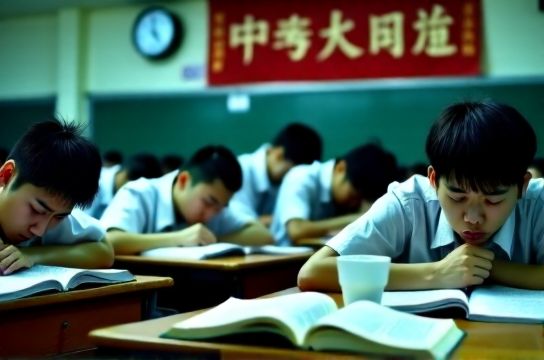
From preschool, kids are funneled into a system that values results over rest. In cities like Beijing and Shanghai, it’s normal for elementary students to have two hours of homework *every night*. By middle school, many wake up before 6 a.m. and don’t get home until after 8 p.m.—thanks to after-school cram sessions known as ‘buxiban.’ And let’s not forget the big one: the Gaokao. This national college entrance exam isn’t just a test—it’s a life-defining event. One shot. One score. Everything rides on it.
But here’s the thing: all this grinding is taking a toll. More and more students report anxiety, sleep deprivation, and burnout. Some even say they’ve lost sight of why they’re studying in the first place. Is it for knowledge? For passion? Nope—it’s for survival in a system where your worth feels tied to your rank.
And while China’s education system produces some of the world’s top math and science scorers, critics argue it sacrifices creativity, mental health, and work-life balance. Students often memorize instead of think, obey instead of question. Teachers admit they’re forced to 'teach to the test' because schools are judged by Gaokao pass rates, not student happiness.
In recent years, the government’s tried to cool the heat. Policies like the 'Double Reduction' reform aim to cut down homework and ban profit-driven tutoring. Sounds great on paper, right? But change is slow. Parents still hire private tutors in secret. Schools still quietly rank students. The pressure hasn’t really lifted—it’s just gone underground.
So what’s the future look like? There’s growing talk about balancing excellence with well-being. Some experimental schools now focus on critical thinking, arts, and emotional health. But for most students, the old model still rules: study hard, score high, survive.
At the end of the day, China’s education system shows both the power and the price of ambition. We can’t ignore its results—but we also can’t ignore the human cost. Maybe true success isn’t just about topping the charts, but about raising kids who are smart *and* sane, driven *and* happy. Now *that’s* a grade worth aiming for.