
Family Expectations and Youth in China
- Date:
- Views:283
- Source:The Silk Road Echo
In modern China, the weight of family expectations rests heavily on the shoulders of its youth. From the moment they start school, many young people are steered toward a singular vision of success: top grades, elite universities, stable careers—especially in fields like medicine, engineering, or finance. This pressure isn’t born out of cruelty, but rather deep-rooted cultural values emphasizing filial piety, collective honor, and upward mobility.
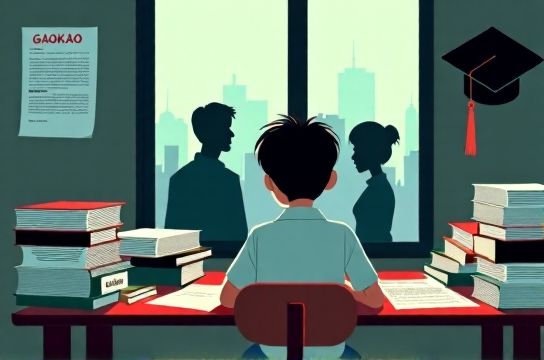
According to a 2023 survey by the Chinese Academy of Social Sciences, over 68% of urban youth report feeling 'high' or 'extreme' academic pressure from their parents. Meanwhile, only 41% feel comfortable discussing emotional or mental health issues at home. The generational gap is real—and it’s widening.
Take the infamous gaokao, China’s national college entrance exam. For millions of students, this nine-hour test isn’t just an exam—it’s destiny. A score can determine not just which university you attend, but your future job prospects, social status, even marriage opportunities. Parents often invest thousands of yuan in tutoring, moving to better school districts, or sacrificing personal comforts—all in the name of their child’s 'bright future.'
The Pressure Pipeline: Education to Employment
But the gaokao is just the beginning. Once in university, many students face new expectations: internships, graduate exams (like the postgraduate entrance exam or overseas applications), and ultimately, a 'prestigious' job. Yet, the job market tells a different story.
| Year | University Graduates (Millions) | Reported Urban Youth Unemployment Rate (%) |
|---|---|---|
| 2020 | 8.74 | 13.1 |
| 2021 | 9.09 | 14.3 |
| 2022 | 10.76 | 19.9 |
| 2023 | 11.58 | 21.3 (peak) |
Source: National Bureau of Statistics of China
With over 11 million graduates entering the job market in 2023, competition is fierce. Many parents still dream of government jobs or positions at state-owned enterprises—roles seen as secure and honorable. But the reality? Only a fraction land these roles. The rest face underemployment, gig work, or prolonged periods of job searching.
Changing Dreams: The Rise of 'Lying Flat' and 'Sang Culture'
In response, a growing number of Chinese youth are pushing back—not with rebellion, but quiet resistance. Terms like tang ping (lying flat) and sang (lit. 'depressed,' used to describe a darkly humorous, resigned worldview) have gone viral online. These aren’t cries for help, but expressions of exhaustion and a desire to redefine success on their own terms.
For example, some choose lower-paying jobs with better work-life balance. Others pursue creative careers—graphic design, indie music, livestreaming—that older generations might dismiss as 'unstable.' According to a 2022 Tencent survey, 36% of Gen Z workers prioritize personal fulfillment over salary, compared to just 18% of millennials.
Bridging the Gap: Can Families Adapt?
The good news? Change is possible. More parents are starting to listen. Mental health awareness is rising, and schools in cities like Shanghai and Shenzhen now offer counseling programs. Open conversations about stress, anxiety, and career choice are slowly becoming less taboo.
Ultimately, the story of Chinese youth isn’t just one of pressure—it’s one of resilience, adaptation, and quiet revolution. As one 22-year-old from Chengdu put it: 'I love my parents, and I want to make them proud. But I also want to be happy. Is that too much to ask?'
The answer, increasingly, is no.