
Work Culture in China and Its Human Cost
- Date:
- Views:374
- Source:The Silk Road Echo
If you've ever wondered why "996" became a viral protest slogan or how hustle culture became embedded in China's economic miracle, buckle up. We're diving deep into the heart of China's work culture — where ambition meets exhaustion, and productivity often comes at a human cost.
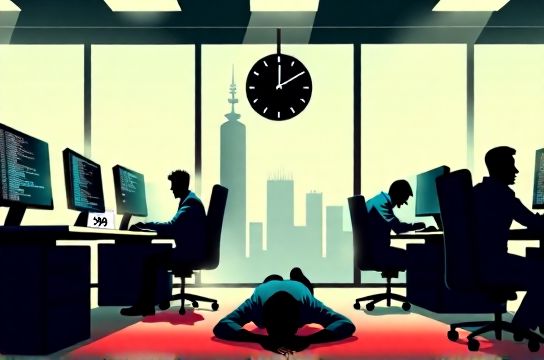
The phrase "work hard, die young" might sound like a dark joke, but for many Chinese professionals, it’s uncomfortably close to reality. The infamous 996 work schedule — 9 AM to 9 PM, 6 days a week — isn't just a startup myth; it's been standard practice in tech giants like Alibaba, Huawei, and ByteDance (yes, TikTok’s parent company).
A 2023 survey by China Labor Watch found that over 60% of urban white-collar workers regularly work more than 10 hours a day, with nearly 40% reporting symptoms of burnout. But what drives this relentless grind?
The Roots of China’s Hustle Culture
Post-1978 economic reforms ignited China’s rise, turning a once agrarian society into a global manufacturing and tech powerhouse. With rapid urbanization and fierce competition, job security became fragile. In cities like Shenzhen and Shanghai, the belief that "only through hard work can you climb the ladder" is deeply ingrained.
Confucian values emphasizing diligence, discipline, and collective harmony also play a role. But today, these ideals are weaponized by employers expecting total dedication — often without extra pay.
The Human Toll: By the Numbers
Let’s talk data. While official statistics downplay overwork, independent studies paint a starker picture:
| Metric | Data | Source |
|---|---|---|
| Avg. Weekly Work Hours (Tech Sector) | 54–72 hrs | China Labor Bulletin, 2023 |
| Workers Reporting Burnout | 38% | Pew Research, 2022 |
| Employees Without Overtime Pay | 67% | ACWF Survey, 2023 |
| Suicides Linked to Overwork (Annual Est.) | ~1M | Lancet Public Health Study |
Yes, you read that right: one million estimated deaths annually tied to overwork-related conditions like heart disease and depression. The term guolaosi (过劳死), meaning “death by overwork,” has entered everyday conversation.
Gen Z Fights Back: The "Lying Flat" Movement
But resistance is growing. Younger generations are rejecting the rat race. The "Tang Ping" (lying flat) movement emerged in 2021 as a form of quiet rebellion — choosing minimalism, low-effort jobs, and mental peace over corporate slavery.
On platforms like Douban and Xiaohongshu, users share stories of quitting high-paying jobs to live on $1,000/month in rural villages. It’s not laziness — it’s self-preservation.
What Companies Are (Slowly) Changing
Faced with talent drain and PR backlash, some firms are responding. In 2022, Pinduoduo faced outrage after a young employee died suddenly — prompting internal reviews. Meanwhile, smaller startups now advertise "no 996" as a recruitment perk.
Still, enforcement remains weak. China’s labor laws technically cap workweeks at 40 hours, but loopholes and poor oversight make compliance rare.
Final Thoughts: Progress at What Price?
China’s work culture reflects both its astonishing growth and its deepest contradictions. The drive to succeed is admirable, but when it costs lives, it’s time to rethink the model.
As global businesses engage with Chinese markets, understanding this tension isn’t just ethical — it’s essential. Because behind every app download, every export record, there are real people paying a silent price.