
Chinese Youth Culture: The Influence of Internet Slang on Communication
- Date:
- Views:247
- Source:The Silk Road Echo
In today’s fast-paced digital world, Chinese youth aren’t just texting—they’re reinventing communication. At the heart of this linguistic revolution? Internet slang. From playful abbreviations to meme-inspired phrases, online lingo has become the secret handshake of China’s Gen Z.
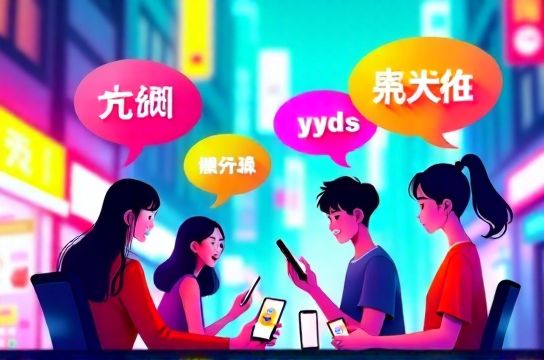
But it’s not just about being trendy. Internet slang shapes identity, builds communities, and even challenges traditional language norms. Let’s dive into how these digital expressions are transforming the way young people connect—online and offline.
The Rise of Net-Speak: More Than Just Shortcuts
Imagine saying “I’m so tired” as “我裂开了 (wǒ liè kāi le)”—literally “I’ve cracked open.” That’s the creativity fueling Chinese internet slang. Born from platforms like Weibo, Douyin, and Xiaohongshu, these expressions blend humor, irony, and cultural references.
Why do they spread so fast? Because they’re relatable. A 2023 survey by iResearch found that 78% of Chinese users aged 15–25 use internet slang daily, mostly in private chats and social media.
Decoding the Lingo: Common Terms & Meanings
Here’s a quick cheat sheet of popular slang and their real-world usage:
| Slang Term | Literal Meaning | Actual Use | Platform Popularity |
|---|---|---|---|
| 社死 (shè sǐ) | Social death | Extreme embarrassment in public | WeChat, Weibo (High) |
| 躺平 (tǎng píng) | Lie flat | Rejecting societal pressure, opting out | Xiaohongshu, Bilibili (Very High) |
| yyds (永远的神) | Forever god | Something or someone is awesome | Douyin, QQ (Extremely High) |
| 内卷 (nèi juǎn) | Involution | Unhealthy competition, burnout culture | Weibo, Zhihu (High) |
These terms aren’t random—they reflect deeper social sentiments. For example, “躺平” emerged as a response to workaholic culture, while “内卷” critiques relentless academic and career competition.
Cultural Impact: Identity, Inclusion, and Resistance
Internet slang does more than save keystrokes—it creates belonging. Using terms like “绝绝子 (jué jué zǐ)” or “破防了 (pò fáng le)” signals you’re part of the in-crowd. It’s linguistic FOMO at its finest.
But there’s a flip side. Teachers and parents often see this slang as eroding proper Mandarin. Some schools have even banned certain terms in essays. Yet, linguists argue this evolution is natural—just like Ebonics in the U.S. or Cockney rhyming slang in the UK.
The SEO Angle: Why This Matters for Digital Content
If you're creating content for young Chinese audiences, ignoring internet slang is like speaking formal French at a punk concert. Brands like Li-Ning and HeyTea leverage slang in campaigns, boosting engagement by up to 40%, according to a 2024 report by QuestMobile.
For SEO, integrating trending terms (without overdoing it) improves visibility on platforms where algorithm-driven discovery rules. Think hashtags like #yyds or #躺平 on Douyin—they generate millions of views.
Final Thoughts: Language in Motion
Chinese internet slang isn’t a phase—it’s a phenomenon. It captures emotion, mocks authority, and unites generations through shared digital experiences. As long as the internet thrives, so will these ever-changing expressions.
So next time you see “栓Q” or “芭比Q了,” don’t roll your eyes. Celebrate it. You’re witnessing language evolve in real time.