
Social Phenomena China: Examining the Gender Gap in Workplace Advancement
- Date:
- Views:297
- Source:The Silk Road Echo
In recent years, the conversation around gender equality in China’s workforce has shifted from hushed whispers to full-blown debates. While China proudly boasts one of the world’s highest female labor force participation rates—around 61% as of 2023 (World Bank)—a deeper dive reveals a persistent and troubling trend: women are significantly underrepresented in leadership roles.
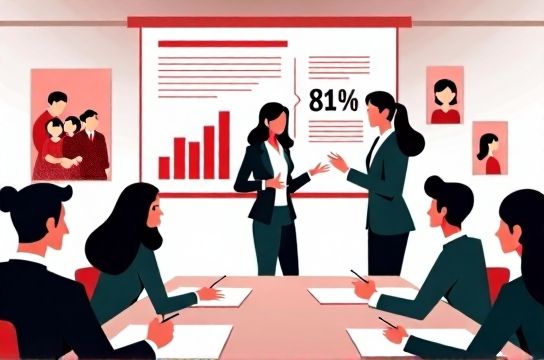
Let’s cut through the noise. Despite educational parity—with women outnumbering men in college enrollment since 2009—the corporate ladder remains steep for many. A 2022 McKinsey report found that while women make up nearly half of entry-level positions in Chinese companies, they hold only 18% of C-suite roles. That’s not just a gap; it’s a canyon.
So, what’s holding women back? The answer isn’t one-size-fits-all, but cultural expectations, workplace bias, and family responsibilities play starring roles. In Chinese society, the traditional view of women as primary caregivers still lingers. Over 70% of women report feeling pressure to prioritize family over career, especially after marriage or childbirth (China Labor Watch, 2023).
And here’s the kicker: maternity often comes at a cost. Some employers subtly (or not-so-subtly) discourage hiring women of childbearing age. In fact, a 2021 survey by智联招聘 (Zhaopin) revealed that 43% of female job seekers experienced direct or indirect discrimination during recruitment.
The Numbers Don’t Lie
Below is a snapshot of gender representation across corporate levels in major Chinese firms:
| Position Level | Female Representation | Male Representation |
|---|---|---|
| Entry-Level | 48% | 52% |
| Mid-Level Management | 36% | 64% |
| Senior Management | 22% | 78% |
| C-Suite Executives | 18% | 82% |
Notice the steady decline? It’s what experts call the “leaky pipeline”—women gradually drop out or get passed over as they climb higher.
But let’s not paint an entirely bleak picture. Change is brewing. Cities like Shanghai and Shenzhen are seeing more companies adopt diversity initiatives. Alibaba and Tencent have launched internal mentorship programs aimed at boosting female leadership. And legally, China’s Civil Code now strengthens protections against employment discrimination.
Still, enforcement is inconsistent. Grassroots movements, like #MeTooChina and women-led labor NGOs, continue pushing for transparency and accountability. Social media has become a powerful tool, with viral stories exposing unfair practices and sparking public outrage.
For real progress, three things need to happen: First, companies must move beyond tokenism and implement measurable diversity goals. Second, paternity leave should be normalized to share caregiving burdens. Third, education campaigns can help shift societal attitudes—because equality shouldn’t start and end at the office door.
In short, closing the gender gap in China’s workplace isn’t just about fairness—it’s smart economics. Studies show diverse leadership teams boost innovation and profitability. So when we talk about social phenomena in China, this isn’t just a women’s issue. It’s a national one.