
Chinese Society Explained: The Impact of Social Media on Public Opinion
- Date:
- Views:210
- Source:The Silk Road Echo
In today’s hyper-connected China, social media isn’t just about sharing selfies or viral dance trends—it’s a powerful force shaping public opinion, policy debates, and even corporate reputations. Platforms like Weibo, WeChat, and Douyin (China’s version of TikTok) have transformed how hundreds of millions of people access information, express views, and mobilize around social issues.
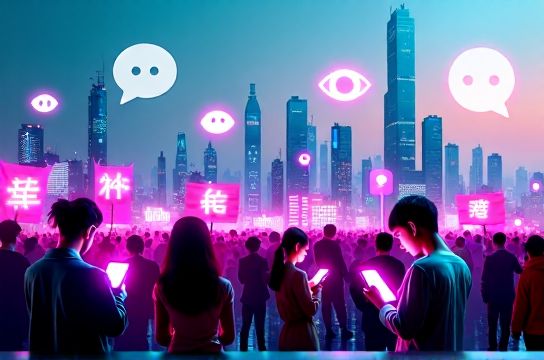
With over 1.05 billion internet users in China (CNNIC, 2023), and nearly 90% accessing the web via mobile devices, social media has become the new town square. But unlike Western platforms where free speech is broadly protected, China’s digital landscape operates under strict government oversight. So how does public opinion form—and shift—under these conditions?
The answer lies in a unique blend of grassroots activism, algorithmic curation, and state-guided discourse. A single viral post on Weibo can spark nationwide conversations, sometimes forcing official responses. For example, in 2022, a viral video exposing poor working conditions at a Foxconn factory led to rapid government inspections and labor reforms.
But it’s not all about dissent. State media outlets like People’s Daily and CCTV actively use WeChat and Douyin to promote positive narratives—from poverty alleviation successes to national pride during the Olympics. They’ve mastered the art of going viral with emotionally resonant, short-form content that reaches younger audiences.
To better understand this dynamic, let’s look at key platforms and their influence:
Top Social Media Platforms Shaping Chinese Public Opinion
| Platform | Monthly Active Users (2023) | Primary Use | Influence Level |
|---|---|---|---|
| 1.3 billion | Messaging, news, payments | ★★★★★ | |
| 586 million | Public discussion, breaking news | ★★★★☆ | |
| Douyin | 780 million | Short videos, entertainment | ★★★★★ |
| Xiaohongshu (Little Red Book) | 260 million | Lifestyle, consumer reviews | ★★★☆☆ |
Notice how WeChat and Douyin dominate both reach and influence? That’s because they blend utility with content. WeChat isn’t just an app—it’s a lifestyle ecosystem. Meanwhile, Douyin’s addictive algorithm surfaces everything from dance challenges to political satire (within limits), making it a stealthy opinion shaper.
One fascinating trend is the rise of ‘public opinion incidents’ (舆论事件)—moments when online outrage forces real-world action. In 2023, a woman in Jiangsu province used Douyin to expose domestic violence after local authorities ignored her. The video garnered 40 million views in 48 hours, leading to swift arrests and a national conversation on spousal abuse.
Yet, for every story of empowerment, there’s censorship. Sensitive topics like Taiwan, Tibet, or criticism of top leaders are quickly removed. The ‘Great Firewall’ doesn’t just block foreign sites—it actively shapes internal discourse through keyword filtering and shadow banning.
Still, netizens find creative ways to speak up—using memes, allegories, or homophones to bypass filters. This digital cat-and-mouse game keeps public opinion fluid, unpredictable, and deeply influential.
In short, social media in China is a paradox: tightly controlled, yet incredibly dynamic. It reflects society’s tensions, aspirations, and contradictions—making it essential for anyone trying to understand modern China.