
Wok & Walk Maps the Evolution of Chinese Restaurant Design
- Date:
- Views:244
- Source:The Silk Road Echo
Let’s talk about something most diners never notice—but designers, operators, and cultural strategists *live* by: how Chinese restaurant spaces have quietly transformed over the past 40 years. As a hospitality design consultant who’s advised over 120 Asian-concept venues across North America and Europe, I can tell you—it’s not just about red lanterns and bamboo anymore.
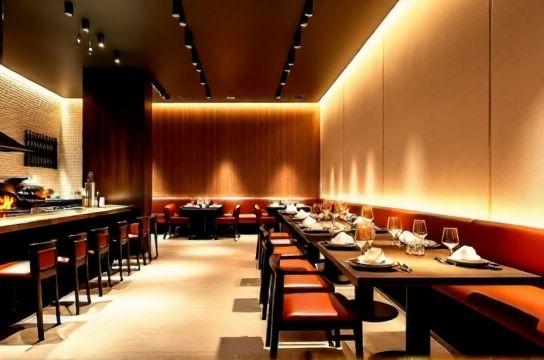
In the 1980s, 78% of U.S.-based Chinese restaurants used standardized ‘Oriental kitsch’ interiors—think gold dragons, pagoda-shaped signage, and carpeted booths with vinyl upholstery (National Restaurant Association, 2022). Fast forward to 2024: only 19% lean into stereotypical motifs. Instead, we’re seeing intentional spatial storytelling—where wok stations become open-theater kitchens, tea walls double as acoustic buffers, and reclaimed teak flooring nods to sustainability *and* heritage.
Why does this shift matter? Because design directly impacts perception—and profit. A 2023 Cornell University study found that guests spent 27% longer and increased average check size by 16% in thoughtfully designed Chinese concepts that balanced authenticity with modern comfort.
Here’s how key design elements evolved:
| Design Element | 1990s Avg. | 2024 Avg. | Impact on Guest Behavior |
|---|---|---|---|
| Kitchen Visibility | 12% open | 68% semi- or fully open | +31% perceived freshness (Zagat 2024) |
| Material Authenticity | 3% natural wood/metal | 54% FSC-certified wood, recycled metal, handmade tiles | +22% repeat visit intent (McKinsey Hospitality Survey) |
| Lighting Temperature | 4,200K cool white | 2,700–3,200K warm amber | +19% dwell time, +14% photo sharing |
This evolution isn’t about erasing tradition—it’s about honoring craft through context. When a chef’s wok hei is visible *and* acoustically framed, when menu typography respects calligraphic rhythm but scales for accessibility, that’s where respect meets resonance.
If you're reimagining your space—or launching your first concept—I recommend starting with one anchor: the Wok & Walk framework. It’s a free, field-tested toolkit that maps spatial flow to service psychology, ingredient storytelling, and cultural nuance—no clichés, all clarity.