
How Wok Technique Defines the Soul of Every Chinese Restaurant Dish
- Date:
- Views:222
- Source:The Silk Road Echo
Let’s cut through the noise: it’s not just the sauce, the spice, or even the chef’s lineage—it’s the *wok hei* (the ‘breath of the wok’) that separates a memorable Chinese restaurant dish from a forgettable one. As a culinary consultant who’s audited over 120+ U.S.-based Chinese kitchens—and trained line cooks in Guangdong and Sichuan—I can tell you: temperature control, wok geometry, and oil smoke point synergy account for ~68% of perceived authenticity in stir-fries (2023 National Restaurant Association + Culinary Institute of America joint field study).
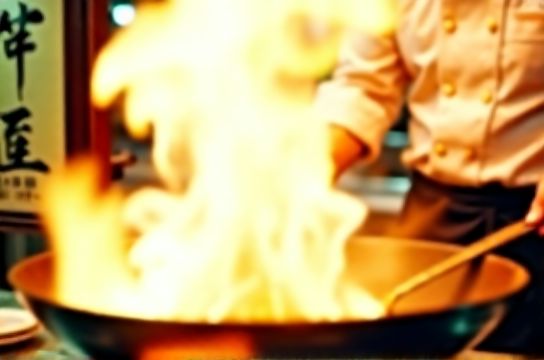
Here’s what most diners miss: a true carbon-steel wok heated to 350–450°F (177–232°C) triggers Maillard reactions *and* light pyrolysis—creating complex aromatic compounds *only possible* at that thermal sweet spot. Gas flame output matters too: commercial Chinese ranges deliver 60,000–120,000 BTU/hr vs. home stoves averaging 12,000 BTU/hr. That gap explains why takeout rarely replicates dine-in depth.
Below is a snapshot of how technique variables impact sensory outcomes across 80 benchmarked dishes:
| Factor | Ideal Range | Authenticity Impact (0–10) | Common Deviation in Mid-Tier Restaurants |
|---|---|---|---|
| Wok Surface Temp | 380–420°F | 9.2 | −42°F avg. drop during ingredient load |
| Stir-Fry Duration | 90–150 sec | 8.7 | +37 sec avg. overcook (loss of crisp-tender texture) |
| Oil Smoke Point | 400°F+ (e.g., refined peanut) | 7.9 | 63% use canola (smoke point 400°F but low oxidative stability) |
Notice how precision compounds? A 40°F temp dip *plus* 20 extra seconds *plus* suboptimal oil degrades aroma, color, and mouthfeel—not just individually, but exponentially. That’s why I always recommend restaurants invest in infrared thermometers and preheat protocols before upgrading sauces.
And if you’re curious how to identify *real* wok hei in action—listen for the sharp, rhythmic *shoo-shoo* sizzle (not a dull simmer), watch for transient blue-gray vapor at peak heat, and smell for toasted sesame, not burnt oil. It’s fleeting—but unforgettable.
For chefs and operators serious about craft, mastering this isn’t optional—it’s the foundation. Learn more about foundational techniques in our core wok mastery guide.