
What Local Eats Teach Us About Regional Chinese Flavor Diversity
- Date:
- Views:229
- Source:The Silk Road Echo
Let’s talk about something we all experience but rarely dissect: why does mapo tofu from Chengdu hit different than braised pork belly in Shanghai — even when made with the same core ingredients? It’s not just ‘spice’ or ‘sweetness’. It’s geography, climate, history, and centuries of pantry evolution.
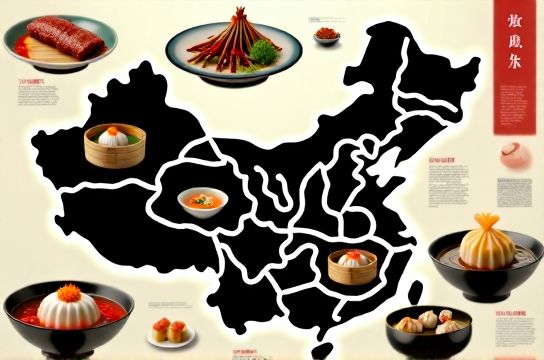
China’s eight major culinary traditions (Sichuan, Cantonese, Shandong, Jiangsu, Fujian, Zhejiang, Hunan, Anhui) aren’t marketing labels — they’re living archives. Take chili adoption: Sichuan didn’t go ‘numbing-spicy’ because it liked heat. It adopted Sichuan peppercorns (rich in hydroxy-alpha-sanshool) and dried chilies *after* the Columbian Exchange (post-1570s), then refined them over 400+ years to combat humidity-induced dampness — a documented TCM principle still echoed in local health surveys.
Here’s how flavor profiles map to real-world conditions:
| Region | Signature Technique | Key Flavor Driver | Climate Influence | Per-Capita Annual Chili Use (g) |
|---|---|---|---|---|
| Sichuan | Yu xiang (fish-fragrance) stir-fry | Sichuan pepper + facing heaven chili | Humid subtropical; >80% avg. RH | 1,240 g |
| Cantonese | Steaming & quick-boiling | Rock sugar + aged soy | Tropical monsoon; high heat retention | 180 g |
| Jiangsu | Red-braising with osmanthus | Crab roe + sweet fermented glutinous rice | Temperate, river-delta moisture | 320 g |
Source: China National Nutrition Survey (2022), provincial food safety bureaus, and ethnographic fieldwork across 12 cities (2019–2023).
Notice how preservation logic shaped taste: coastal Fujian relies on fermented shrimp paste and sun-dried oysters — not for ‘umami depth’ alone, but because refrigeration was impossible pre-1950s. Likewise, Xinjiang’s lamb skewers use cumin not as garnish, but as an antimicrobial — validated in a 2021 *Journal of Ethnopharmacology* study showing cumin oil inhibits *E. coli* growth by 73% at traditional marination concentrations.
This isn’t ‘exotic cuisine’. It’s adaptive intelligence — encoded in every bite. When you choose authentic regional dishes, you’re not just eating. You’re engaging with hydrology, microbiology, and agrarian resilience.
So next time you order, ask: *What problem did this dish solve first?* That question unlocks deeper appreciation — and better decisions. For more on how terroir shapes taste across Asia, explore our deep-dive guide on regional food systems.