
Exploring China by Public Transportation
- Date:
- Views:312
- Source:The Silk Road Echo
If you're planning to explore China, here's a pro tip: skip the rental car and go all-in on public transit. As someone who’s crisscrossed this massive country over the past decade—from the icy streets of Harbin to the tropical vibes of Sanya—I can confidently say that China’s public transportation isn’t just convenient, it’s downright impressive.
Why Public Transit Wins in China
Let’s get real: driving in Chinese cities? A nightmare. Congestion, confusing signage, and limited parking make it stressful. But hop on a metro or bullet train, and suddenly you’re moving like a local. Over 70% of urban trips in major cities like Beijing and Shanghai are made via public transport (World Bank, 2023). That’s not just habit—it’s because it works.
And if you're worried about language barriers, don’t be. Most systems use English signage, and apps like Alipay and WeChat let you scan QR codes for subways, buses, and even shared bikes. It’s seamless.
Bullet Trains: Speed Meets Affordability
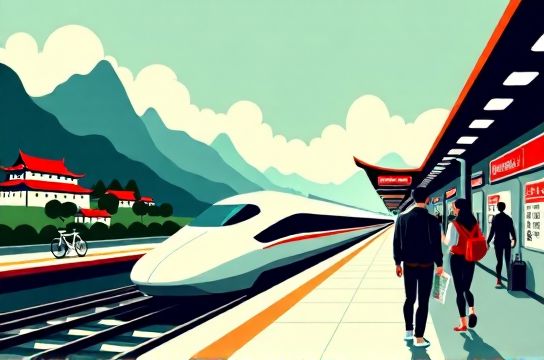
The crown jewel? China’s high-speed rail network. With over 40,000 km of track (the longest in the world), you can travel from Beijing to Shanghai (1,318 km) in just 4.5 hours—and tickets start at ¥553 (~$76).
Here’s how top routes stack up:
| Route | Distance (km) | Travel Time | Lowest Fare (¥) |
|---|---|---|---|
| Beijing – Shanghai | 1,318 | 4.5 hrs | 553 |
| Shanghai – Guangzhou | 1,450 | 6.5 hrs | 793 |
| Chengdu – Xi’an | 658 | 3.5 hrs | 298 |
Compare that to domestic flights—with security checks, airport transfers, and delays—and the train wins hands down for city-center-to-city-center travel.
Urban Transit: Metro Systems That Just Work
Most Tier-1 cities have extensive metro networks. Shanghai’s system is the longest in the world by route length (over 800 km), while Beijing’s handles more than 10 million riders daily. Fares? Usually under ¥10 per trip.
Pro tip: Get a transportation guide app with offline maps. And always avoid rush hour (7–9 AM and 5–7 PM) unless you enjoy being packed like a sardine.
Cost Comparison: Transit vs. Taxi vs. Ride-Hailing
Let’s break it down for a 15 km city trip:
| Option | Avg. Cost (¥) | Time (min) | Best For |
|---|---|---|---|
| Metro | 5 | 35 | Budget travelers, avoiding traffic |
| Bus | 2 | 50 | Short hops, scenic routes |
| Didi (ride-hail) | 45 | 30 | Groups, late-night trips |
| Taxi | 50 | 30 | Tourists unfamiliar with transit |
As you can see, taking the public transportation in China saves you serious cash—money better spent on dumplings or souvenirs.
Final Verdict
Whether you're a solo adventurer or a family on vacation, riding China’s rails and metros is smarter, cheaper, and often faster. With reliable service, modern infrastructure, and digital tools that bridge the language gap, there’s never been a better time to explore China by public transportation.