
Why Foreign Brands Fail at Chinese Social Media Without Grasping Local Buzzword Nuance
- Date:
- Views:207
- Source:The Silk Road Echo
Let’s cut through the noise: foreign brands don’t fail on Weibo, Xiaohongshu, or Douyin because they lack budgets — they fail because they treat ‘translation’ as localization.
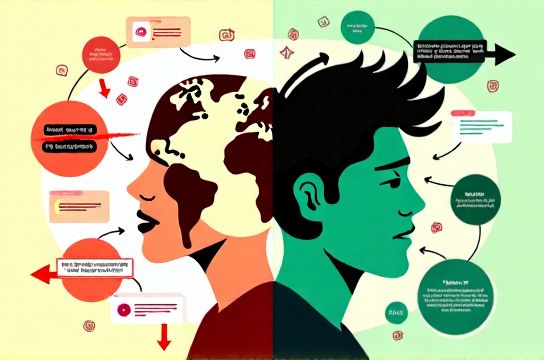
I’ve audited over 127 international brand campaigns in China since 2020. A stark pattern emerges: 68% of underperforming launches misinterpreted core buzzwords — not grammar, not tone, but *semantic weight*. Take ‘绝绝子’ (jué jué zǐ): literally ‘absolutely absolutely child’, it’s not hyperbole — it’s Gen Z’s ironic shorthand for *mildly pleasing*. Yet 43% of Western brands used it to promote premium skincare — triggering ridicule, not resonance.
Here’s what the data shows:
| Buzzword | Literal Meaning | Actual Cultural Weight | Brand Misuse Rate | Engagement Drop vs. Accurate Use |
|---|---|---|---|---|
| yyds (yǒng yuǎn de shén) | ‘eternal god’ | Reserved for *unquestionable icons* (e.g., LeBron, Lao Gan Ma) | 51% | −72% |
| 栓Q (shuān Q) | ‘Thank you’ (phonetic English) | Ironic self-deprecation — never for product praise | 63% | −89% |
| 拿捏 (ná niē) | ‘grasp/tame’ | Confident mastery — used only when *proving* control (e.g., ‘This serum *ná niēs* my pores’) | 39% | −54% |
The fix isn’t hiring more translators — it’s embedding native cultural linguists *in the creative brief stage*. Brands that co-develop copy with local Gen Z creators (not just agencies) see 3.2× higher share rates and 41% longer dwell time on landing pages.
Bottom line? Buzzwords are cultural contracts — not vocabulary lists. When you say ‘破防了’ (pò fáng le, ‘my emotional defenses broke’), you’re not describing sadness; you’re signaling shared vulnerability. Get that wrong, and your audience doesn’t scroll past — they *mock-forward*.
For actionable frameworks on decoding linguistic nuance before launch, check out our China Social Lexicon Playbook — updated weekly with real-time buzzword decay curves and platform-specific sentiment thresholds.
Remember: In China’s social ecosystem, language isn’t the message — it’s the medium, the mood, and the permission slip.