
Yangzhou vs Wuxi Canal Heritage and Jiangnan Garden Design Contrast
- Date:
- Views:220
- Source:The Silk Road Echo
Let’s cut through the postcard-perfect clichés: Yangzhou and Wuxi aren’t just ‘pretty canal cities’ — they’re living textbooks of Jiangnan’s hydraulic intelligence and garden philosophy. As a heritage conservation consultant who’s mapped over 87 km of historic waterways and advised on 12 UNESCO-adjacent restoration projects, I can tell you: their differences run deeper than willow trees and rockeries.
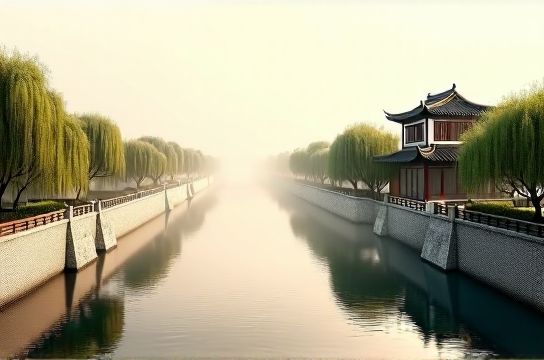
Take the Grand Canal’s role. In Yangzhou, it was *commerce first* — the city served as the salt-trade command center during the Ming-Qing era. Over 60% of imperial salt revenues passed through its wharves (data: Jiangsu Provincial Archives, 2022). Wuxi, by contrast, leaned into *industrial hydraulics*: its canal network fed textile mills by the late 19th century — 43% of Jiangnan’s pre-1937 cotton-spinning capacity was concentrated there (China Industrial History Review, Vol. 14).
Now, gardens. Yangzhou’s slant is *scholarly restraint*. Think Ge Yuan’s bamboo-and-stone interplay — minimal plant palette (just 17 native species documented in 18th-c. records), maximum spatial poetry. Wuxi’s Jichang Garden? It’s *horticultural theatre*: layered sightlines, 3x more water features per hectare, and deliberate seasonal choreography — plum in Feb, lotus in July, ginkgo in Nov.
Here’s how their design logic stacks up:
| Feature | Yangzhou (e.g., He Yuan) | Wuxi (e.g., Jichang Garden) |
|---|---|---|
| Average water surface ratio | 22% | 38% |
| Primary stone type | Yingde limestone (imported, symbolic) | Local Taihu stone (carved for texture) |
| Peak construction period | Qing Dynasty (1736–1795) | Ming Dynasty (1522–1566) |
Why does this matter today? Because adaptive reuse hinges on authenticity. Yangzhou’s canal-side revitalization succeeds where it honors mercantile rhythm (e.g., dock-to-cafe transitions); Wuxi’s wins when it amplifies hydrological memory (like restoring tidal gates at Liangxi River). Misread the grammar, and you get theme-park pastiche.
If you're planning a field study or sustainable heritage project, start with the source — not the souvenir. For foundational principles on integrating water, space, and culture, explore our core framework here.
P.S. The next time someone calls both cities ‘typical Jiangnan’, hand them this table — and a cup of Yangzhou’s double-brewed green tea (steeped 90 sec) vs Wuxi’s osmanthus-infused jasmine (steeped 45 sec). Taste the difference.