
Deep Dive Into Chinese Intangible Heritage Through Music Craft And Ritual Performance Travel
- Date:
- Views:228
- Source:The Silk Road Echo
Let’s talk about something truly alive—not in museums behind glass, but in village courtyards, temple steps, and mountain shrines where elders still tune a *sheng*, beat a *bangu*, or chant the *Jiangsu Kunqu* score from memory.
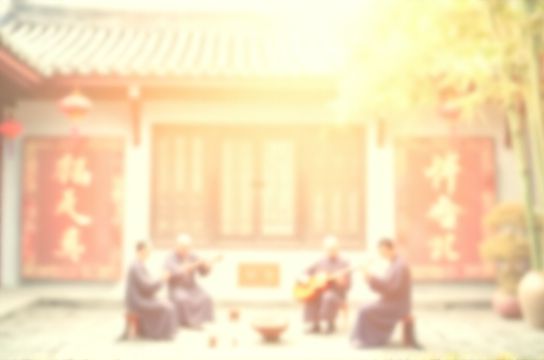
China’s intangible cultural heritage (ICH) isn’t static folklore—it’s a living ecosystem. UNESCO lists 43 elements from China (as of 2023), the most of any country—and over 60% involve music, ritual performance, or craft-integrated ceremony. Think: the *Nuo opera* of Guizhou (with masks carved from camphor wood aged 3+ years), or Fujian’s *Nanyin*—a 1,000-year-old ensemble using silk-stringed *pipa*, bamboo *dongxiao*, and vocal phrasing that predates standard Mandarin tones.
Why does this matter for travelers? Because ‘ritual performance travel’—a fast-growing niche—delivers deeper cultural ROI than sightseeing. A 2024 China Tourism Academy study found participants spent 2.7× longer engaging with local communities and reported 41% higher retention of cultural context vs. conventional tours.
Here’s how music craft and ritual intersect on the ground:
| Heritage Element | Region | Key Musical/Craft Component | Authenticity Benchmark |
|---|---|---|---|
| Nanyin | Quanzhou, Fujian | Silk-string *pipa* (tuned to Tang-era pentatonic scale) | Master-apprentice transmission ≥15 years; only 12 certified inheritors remain |
| Guzheng Craft (Zhejiang style) | Huzhou, Zhejiang | Paulownia wood aged ≥8 years; hand-carved bridges | ≤30 instruments/year per master workshop |
| Xiangsheng Ritual Chant | Changsha, Hunan | Drum patterns synced to ancestral genealogy recitation | Performed only during Qingming & Winter Solstice |
The takeaway? Don’t just watch—listen closely, ask about tuning methods, touch the grain of a ritual drum shell, and respect seasonal timing. That’s how you move from spectator to steward.
And if you’re planning such a journey, start with community-verified itineraries—not generic packages. Because real heritage doesn’t perform on demand. It invites you in—on its terms.