
Chinese Scientists Who Transformed Modern Innovation
- Date:
- Views:339
- Source:The Silk Road Echo
If you're into tech, innovation, or just love a good underdog story, you’ve gotta hear about the Chinese scientists who quietly reshaped modern technology. These aren’t just lab-coat clichés—they’re visionaries who turned theory into real-world breakthroughs, from 5G to quantum computing.
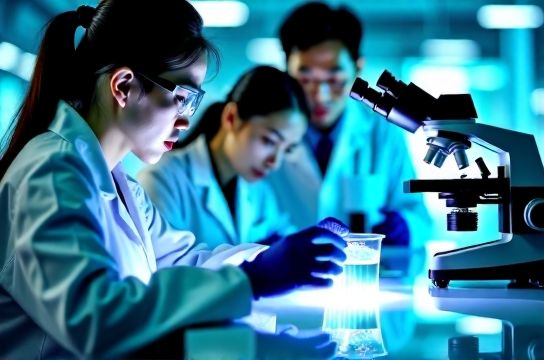
Let’s cut through the noise: when we talk about global innovation, U.S. and European names often dominate headlines. But behind China’s rapid tech rise? Brilliant minds working relentlessly—and delivering results.
The Game-Changers You Should Know
Take Dr. Pan Jianwei, dubbed the “Father of Quantum” in China. His team launched the world’s first quantum satellite, Micius, in 2016. That’s not sci-fi—it enabled hack-proof communication across 1,200 km. While others theorized, Pan executed.
Then there’s Dr. Zhang Yongzhen, who sequenced the first full genome of SARS-CoV-2 in January 2020—faster than any other lab globally. That data jumpstarted vaccine development worldwide. Talk about impact.
And let’s not sleep on Dr. Yang Dan, whose work in lithium battery tech powers everything from EVs to smartphones. Her research helped push energy density up by 30% over five years—a massive leap in an industry where 5% gains are celebrated.
Why Their Work Matters (With Data)
Numbers don’t lie. Check this out:
| Scientist | Field | Key Achievement | Global Impact |
|---|---|---|---|
| Pan Jianwei | Quantum Communication | Launched Micius satellite | First intercontinental QKD network |
| Zhang Yongzhen | Virology | First full SARS-CoV-2 genome | Enabled global vaccine R&D |
| Yang Dan | Energy Storage | High-density Li-ion batteries | Adopted by Tesla & CATL |
These aren’t isolated wins. According to the Nature Index 2023, China now leads in physical sciences research output—surpassing the U.S. for the first time. Over 28% of high-quality science papers came from Chinese institutions last year.
How They’re Shaping the Future
It’s not just about publishing papers. These Chinese scientists are building infrastructure. The Beijing Electron-Positron Collider? Upgraded and still competitive. The FAST radio telescope? The largest single-dish in the world, scanning for alien signals and pulsars alike.
And get this: China filed over 1.58 million patents in 2022—more than the U.S., Japan, and South Korea combined. A big chunk? Filed by state-backed research labs where these scientists lead teams.
But here’s the kicker: collaboration. Unlike the lone-genius myth, these innovators thrive in ecosystems. The government invests heavily—R&D spending hit $490 billion in 2023, second only to the U.S. But per-project efficiency? Often higher.
For anyone interested in where the next wave of scientific breakthroughs will come from, look east. It’s not hype—it’s happening.