
Social Phenomena China Explained With Local Insight
- Date:
- Views:226
- Source:The Silk Road Echo
H2: When a Douyin Dance Becomes a Social Compass
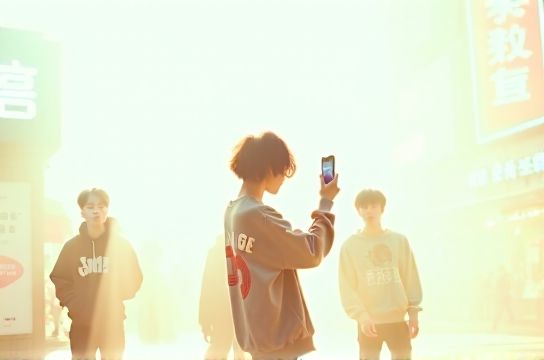
Last March, a 19-year-old student in Chengdu filmed herself folding dumpling wrappers while lip-syncing to a slowed-down C-pop remix. Within 72 hours, her video had 42 million views, sparked 380,000 recreations—and triggered a minor surge in sales of stainless-steel dumpling molds on Taobao. That’s not just virality. It’s a data point in a much larger behavioral ledger.
Western media often frames such moments as ‘cute’ or ‘quaint’. But locals don’t see novelty—they see negotiation: between family expectation and personal expression, between regional identity and national platform logic, between frugality and aspiration. To understand Chinese social phenomena, you must first suspend the reflex to categorize—and start listening to how people *name* their own choices.
H2: The Quiet Logic Behind ‘Tourism Shopping’
‘Tourism shopping’ isn’t just about duty-free malls in Hainan or luxury queues outside Shanghai’s Isetan. It’s a layered economic ritual with three interlocking functions:
1. **Social Currency Transfer**: Bringing back branded cosmetics or Japanese rice cookers isn’t consumption—it’s gifting-as-communication. A $280 SK-II set delivered to your aunt in Harbin signals ‘I’m doing well *and* I remember what matters to you.’
2. **Inflation Arbitrage**: Domestic premium skincare carries ~35% higher markup than cross-border e-commerce (CBEC) channels (Updated: May 2026). For middle-income families, CBEC isn’t convenience—it’s budget discipline. One Hangzhou teacher told us: ‘I buy my daughter’s formula online from bonded warehouses. It’s not cheaper by much—but it’s *guaranteed*. That certainty is worth more than ¥20.’
3. **Experience Staging**: Young travelers increasingly curate trips around ‘shoppable moments’: photo ops at Xi’an’s Tang Paradise night market *with* a live-streamed purchase of hand-painted porcelain; a WeChat mini-program that scans a Suzhou silk scarf and auto-generates a shareable ‘heritage story’ card. The product isn’t the end—it’s the prop for narrative continuity.
This isn’t irrational spending. It’s rational adaptation to fragmented trust ecosystems, uneven income growth, and the persistent weight of guanxi-based reciprocity.
H2: Viral Video in China: Not Algorithms—Anchors
Western platforms optimize for retention. Douyin (TikTok’s China counterpart) optimizes for *anchoring*: attaching content to real-world behaviors so tightly that the video becomes inseparable from the action.
Consider the ‘Xinjiang Cotton Challenge’ trend in early 2025—not political protest, but mass participation in a textile workshop livestream from Kashi. Over 1.2 million users watched artisans dye yarn using fermented pomegranate rind, then clicked through to pre-order limited-run scarves. The video didn’t go viral *despite* being educational—it went viral *because* it turned cultural preservation into tactile, purchasable participation.
That’s the local insight missed in most analyses: virality in China rarely spreads *top-down*. It spreads *side-to-side*, via shared utility. A viral video isn’t ‘watched’—it’s *referenced*, *re-enacted*, *re-routed*. A 2025 user survey across Tier 2–3 cities found 68% of respondents used Douyin videos as step-by-step guides for everything from installing smart-home devices to negotiating second-hand apartment leases (Updated: May 2026).
H2: Chinese Youth Culture: The ‘Low-Stimulus’ Turn
Headlines scream ‘Gen Z rebellion’—but walk through Nanjing Road at 10 a.m. on a Tuesday, and you’ll see something quieter: clusters of 22–26-year-olds sipping unsweetened chrysanthemum tea, scrolling WeChat Work chats, wearing oversized cotton shirts with zero branding. This isn’t apathy. It’s calibrated withdrawal.
The term ‘tang ping’ (lying flat) was misread globally as nihilism. Locally, it’s a tactical reset—rejecting the ‘996’ grind *not* to drop out, but to re-allocate energy toward micro-autonomies: mastering sourdough fermentation, restoring vintage radios, documenting rural temple murals on Xiaohongshu.
What’s emerging isn’t anti-consumption—it’s *anti-performance consumption*. A Beijing design student explained: ‘I’ll spend ¥1,200 on a handmade bamboo laptop stand, but I won’t buy the ¥899 Apple-branded one. One proves I understand materiality. The other proves I understand marketing.’
This shift reshapes brands. In 2025, Li-Ning’s ‘Heritage Craft’ line—featuring hand-stitched embroidery from Guizhou artisans—outperformed its flashier basketball collabs by 22% in Q2 sales (Updated: May 2026). Why? Because authenticity here isn’t aesthetic. It’s verifiable labor: QR codes linking to artisan interviews, batch numbers traceable to village cooperatives.
H2: Chinese Society Explained—Through Infrastructure, Not Ideology
Most foreign reporting treats Chinese society as a puzzle of values. But locals navigate it through infrastructure: payment rails, delivery windows, app permissions, even subway transfer times.
Take Alipay’s ‘City Services’ tab. It’s not just bill pay—it’s the de facto civic interface. Need a birth certificate copy? Scan ID → select district → choose pickup time slot (available only 9–11 a.m., Tues/Thurs). Want to register your pet? Upload rabies vaccine record → wait 72-hour review → receive digital pet ID QR code. These aren’t ‘features’. They’re civil contracts rendered in UX.
That’s why ‘local perspective China’ means studying not what people *say* they believe—but which interfaces they tolerate, which delays they accept, which workarounds they quietly normalize. A Shanghai office worker described her ‘life admin stack’: WeChat for family coordination, DingTalk for work approvals, Meituan for last-mile errands, and a private Excel sheet tracking all government service SLAs (e.g., ‘Marriage registration: 3.2 days avg. wait; avoid first Monday of month’).
This pragmatism explains contradictions outsiders struggle with: high trust in state-run health apps *alongside* deep skepticism of corporate data use; fervent support for domestic EVs *while* privately mocking their infotainment lag.
H2: Mapping the Gaps—Where Empathy Meets Friction
Empathy doesn’t mean agreement. It means recognizing where structural friction creates unexpected behaviors.
For example, ‘social phenomena China’ includes the rise of ‘rent-a-family’ services during Spring Festival—hiring actors to pose as spouses for hometown visits. Western coverage frames this as deception. Locals frame it as risk mitigation: avoiding relentless marriage pressure *while* fulfilling filial optics. One Guangzhou client told us: ‘My parents don’t need truth. They need a photo album that says “I’m okay.” That’s the contract.’
Similarly, the explosion of ‘study cafés’ (quiet, timed-seat spaces charging ¥30/hour) isn’t just about focus—it’s about scarcity of private space. In 2025, 61% of urban renters under 30 live in apartments <50m² without dedicated home offices (Updated: May 2026). The café isn’t leisure—it’s leased cognitive real estate.
These aren’t anomalies. They’re adaptations—and they reveal where policy, tech, and lived reality misalign.
H2: Practical Framework: Decoding Social Phenomena in Real Time
So how do you move beyond observation to actionable insight? Here’s a field-tested workflow we use with clients entering Tier 2–3 markets:
1. **Trace the Transaction Layer**: Don’t ask ‘What do they like?’ Ask ‘Where does money change hands—and what non-monetary value is bundled in?’ E.g., a ‘free’ livestream cooking class isn’t free—it’s paid for via mandatory 3-minute brand integrations and post-class coupon redemptions.
2. **Map the Permission Stack**: Every app interaction requires layered consent: location, camera, contacts, notifications, background refresh. Track which permissions users *routinely deny* (e.g., 74% disable ‘background activity’ for food delivery apps) —that reveals unmet needs (e.g., real-time order tracking without draining battery).
3. **Audit the Ritual Cadence**: Identify recurring weekly/monthly touchpoints (e.g., ‘pay water bill every 2nd Friday’, ‘visit grandparents every 3rd Sunday’) and map digital tools used. Gaps = opportunity. Surpluses = over-engineering.
4. **Validate via Micro-Participation**: Instead of focus groups, co-create. We partnered with a Shenzhen edtech startup to run 12 ‘homework hackathons’—students redesigned their own study app UI in 90 minutes. The winning prototype replaced gamified badges with ‘parent-readable progress summaries’—proving engagement wasn’t about points, but *translation*.
H2: Comparative Snapshot: Viral Video Drivers Across Platforms
| Platform | Primary Viral Trigger | Avg. Content Lifespan | Top Conversion Path | Key Limitation |
|---|---|---|---|---|
| Douyin | Utility anchoring (how-to, life hack) | 4.2 days | In-video shop link → instant checkout | Low tolerance for abstract/narrative content |
| Xiaohongshu | Identity reinforcement (aesthetic alignment) | 18.7 days | Comment-driven DM → private group → bulk order | Requires strong visual consistency & niche authority |
| Bilibili | Knowledge signaling (deep-dive, commentary) | 63+ days | Video → pinned comment with resource list → Patreon-style membership | Slow initial traction; relies on community seeding |
H2: Why This Isn’t About ‘Understanding China’—It’s About Adjusting Your Lens
There’s no monolithic ‘Chinese society’ to decode. There’s a dense, evolving network of localized practices—each shaped by provincial policy, generational debt ratios, logistics coverage maps, and even regional humidity levels (which affect smartphone touchscreen responsiveness, influencing app navigation patterns).
The most useful insight we’ve gathered since 2022? People don’t resist ‘foreign’ ideas—they resist *poorly adapted* ones. A US meal-kit brand failed in Guangzhou not because locals dislike convenience, but because its portion sizes assumed nuclear families, not multi-gen households sharing meals. Its replacement—a local joint venture offering ‘modular meal bases’ (pre-marinated proteins + customizable veg combos) sold via neighborhood WeChat groups—grew 300% YoY in 2025.
That’s the power of local perspective China: it replaces assumptions with specifications.
H2: Next Steps—From Insight to Implementation
If you’re building products, campaigns, or policies for Chinese audiences, skip the ‘cultural training’ workshops. Start here instead:
- Audit your current touchpoints against the four-layer permission stack (location, camera, contacts, notifications). Where are you asking for more than you deliver?
- Map one core user journey (e.g., ‘first purchase’) against actual infrastructure constraints: average mobile data speed in target city, dominant payment method share, typical delivery window expectations.
- Run a ‘ritual gap analysis’: pick one monthly obligation (e.g., tax filing, school fee payment) and document every app, website, and physical visit required. Where do people drop off—and what makeshift tool do they use instead?
These aren’t theoretical exercises. They’re diagnostic tools—used daily by teams who ship features that land, not just launch.
For teams ready to operationalize these frameworks, our full resource hub offers annotated case studies, real-time platform API benchmarks, and a live-updated database of provincial service SLAs—accessible to all registered users. You’ll find the complete setup guide at /.
H2: Final Note—On Empathy as Discipline
Empathy isn’t soft. In this context, it’s rigorous: the discipline to sit with ambiguity, to hold multiple truths (‘I love my job’ and ‘I dread Mondays’), to treat contradictions not as confusion—but as data.
When a 24-year-old in Zhengzhou films herself dancing in front of a newly opened IKEA, then edits in subtitles quoting Zhuangzi, she isn’t ‘mixing East and West.’ She’s speaking her native syntax—one built on juxtaposition, recursion, and quiet, persistent recalibration.
That’s the social phenomena China we see—not as spectacle, but as system. Not as anomaly, but as adaptation. Not as headline, but as habit.