
From Hustle Culture to Quiet Quitting: The Shifting Mindset of Urban Chinese Workers
- Date:
- Views:292
- Source:The Silk Road Echo
Remember when "996"—working from 9 AM to 9 PM, six days a week—was glorified as the ultimate hustle? Fast forward to today, and urban Chinese workers are hitting the brakes. The once-celebrated grind culture is giving way to quiet quitting, a silent but powerful shift in workplace values.
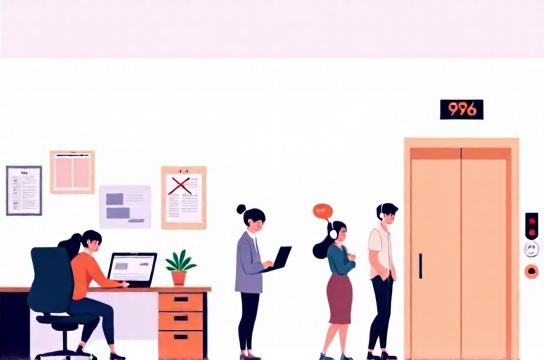
This isn’t about laziness—it’s a rebellion against burnout. A 2023 survey by Zhaopin revealed that 68% of Gen Z employees prioritize work-life balance over high salaries. That’s a seismic change from the past decade, where long hours equaled loyalty and ambition.
So what changed? Let’s break it down.
The Rise and Fall of Hustle Culture
Hustle culture peaked during China’s tech boom. Founders like Jack Ma praised 996 as a “blessing,” and young professionals wore exhaustion like a badge of honor. But beneath the surface, mental health suffered. According to the Chinese Mental Health Association, work-related anxiety among urban professionals rose by 42% between 2018 and 2022.
Now, people are asking: Is this really worth it?
Enter Quiet Quitting: Doing the Job, Not the Soul
Quiet quitting doesn’t mean leaving your job. It means doing exactly what’s in your contract—and nothing more. No overtime. No weekend emails. No emotional over-investment.
It’s a pushback against blurred boundaries. A recent report from Peking University found that 57% of white-collar workers now disengage after hours, compared to just 29% in 2019.
| Year | Workers Willing to Work Overtime | Employees Reporting High Stress |
|---|---|---|
| 2018 | 76% | 41% |
| 2023 | 34% | 67% |
See the trend? Less willingness to hustle, more awareness of mental load.
Why This Matters for Employers
Companies clinging to old-school expectations are losing talent. LinkedIn’s 2023 China Workforce Report shows that 44% of resignations were due to poor work-life balance—topping salary as a reason for leaving.
The smart employers? They’re adapting. Firms like Xiaomi and Huawei have introduced flexible hours and mental health days. Result? Higher retention and better productivity.
The Bigger Picture: Redefining Success
This shift isn’t just about time—it’s about values. Younger workers aren’t chasing status symbols. They want meaning, flexibility, and peace. As one Shanghai-based project manager put it: “I don’t want my tombstone to say ‘He replied to emails at midnight.’”
The message is clear: the future of work in China isn’t louder. It’s quieter, wiser, and more human.