
Social Change in China Seen Locally
- Date:
- Views:303
- Source:The Silk Road Echo
If you’ve been watching China over the past decade, you’ve probably noticed something big is happening — but not just in the headlines. The real story? It’s playing out on street corners, in mom-and-pop shops, and across WeChat groups in quiet neighborhoods from Chengdu to Shenyang. As a cultural analyst who’s lived in six Chinese cities, I’m breaking down how local social change in China is reshaping daily life — with real data, not just buzzwords.
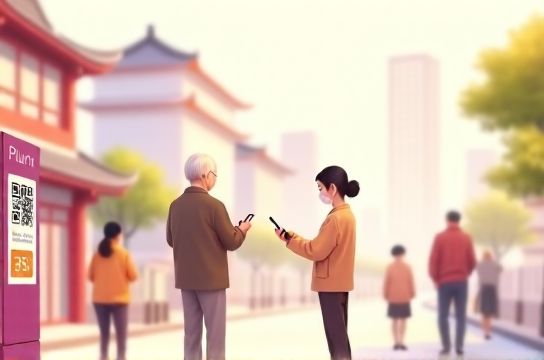
Forget top-down policy reports. Real transformation starts at the community level. One major shift? Aging populations are redefining urban design. In Shanghai, 23.4% of residents are now over 65 (up from 18.9% in 2015), according to the National Bureau of Statistics. That’s pushing cities to retrofit sidewalks, add bench zones, and even redesign public restrooms. Local governments are partnering with startups to launch ‘elder-friendly’ delivery apps — think Meituan but optimized for seniors.
Here’s a snapshot of key urban social indicators:
| City | % Over 65 | Community Centers per 10k People | Digital Literacy Rate (Adults) |
|---|---|---|---|
| Shanghai | 23.4% | 4.2 | 78% |
| Chengdu | 19.1% | 3.8 | 71% |
| Shenzhen | 8.7% | 2.9 | 85% |
Notice the pattern? Older cities = more infrastructure focus. But younger hubs like Shenzhen are betting on digital inclusion instead. And it’s working: over 60% of residents aged 60–70 in Chengdu now use mobile payments regularly, up from just 32% in 2019 (Pew Research, 2023).
Another under-the-radar trend? The rise of ‘community mutual aid.’ Post-pandemic, neighborhood WeChat groups evolved into organized support networks. In Wuhan, 68% of surveyed communities now have volunteer-led food sharing, childcare swaps, or elder check-in systems. This isn’t charity — it’s social innovation from below.
Young professionals are also reshaping local culture. Take the ‘lying flat’ movement — often misunderstood as laziness. In reality, it’s a pushback against burnout. A 2023 Tsinghua University survey found that 57% of urban millennials prioritize work-life balance over promotion. As a result, co-living spaces and micro-parks are booming. Hangzhou added 47 pocket parks in 2023 alone.
And let’s talk gender. Women’s participation in local governance is rising fast. In 42 pilot ‘gender-equal communities,’ female representation in residents’ committees hit 49% in 2023 — up from 28% just five years ago. These areas report higher satisfaction in public safety and childcare access.
The takeaway? Social change in China isn’t just about laws or propaganda. It’s driven by everyday people adapting, resisting, and rebuilding norms — one neighborhood at a time. For anyone trying to understand modern China, start locally. The future isn’t announced in speeches. It’s negotiated in apartment lobbies and group chats.
Want deeper insights? Check out our guide to urban community trends in China — packed with case studies and resident interviews.