
Beyond the Headlines: The Social Roots of 'Involution' in Chinese Society
- Date:
- Views:268
- Source:The Silk Road Echo
If you've been online in China lately, you've probably seen the word neijuan — or 'involution' — popping up everywhere. It’s not just a buzzword; it’s a cultural sigh, a collective eye-roll at the endless grind. But what exactly is involution, and why does it feel like everyone’s trapped in it?
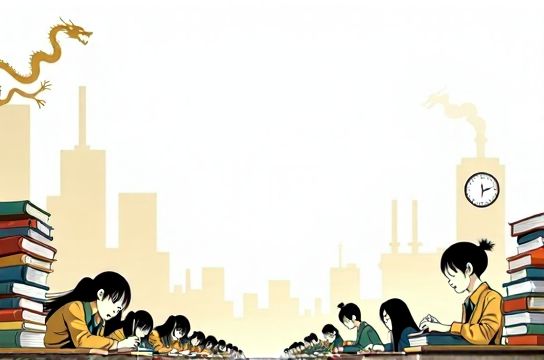
In simple terms, involution describes a situation where people work harder and harder but gain little in return. It’s like running on a treadmill that keeps speeding up — exhausting, frustrating, and going nowhere. From students pulling all-nighters to white-collar workers answering emails at midnight, the pressure to outdo others has turned daily life into an invisible race.
Let’s look at some numbers. A 2023 survey by Zhaopin.com found that over 67% of young professionals in first-tier cities like Beijing and Shanghai report working more than 50 hours per week. Meanwhile, education statistics show the average high school student sleeps less than 7 hours a night — far below the recommended 8–10 hours for teens.
| Group | Avg. Work/Study Hours (Weekly) | Sleep Duration (Hours/Night) | Reported Stress Level (1-10) |
|---|---|---|---|
| Urban Professionals (25–35) | 52 | 6.8 | 7.9 |
| High School Students | 58 | 6.4 | 8.5 |
| College Graduates (Job Seekers) | 45 | 7.0 | 7.2 |
So why does this happen? One major factor is population density meets limited opportunity. With millions competing for top schools, jobs, and even social status, any small edge feels necessary. In elite universities, for example, students don’t just aim to pass — they stress over GPA rankings, internships, and side projects, all to stand out in a saturated job market.
Another driver? Social expectations. In many families, success is narrowly defined: top grades, a stable job, home ownership. Straying from this path can bring judgment, not support. This pressure cooker environment fuels comparison culture — especially on social media, where everyone seems to be leveling up while you’re stuck on the same rung.
But here’s the twist: awareness is growing. More people are embracing tangping (‘lying flat’) or jiayou (self-motivation with balance) as forms of quiet resistance. They’re redefining success — not by hustle, but by happiness.
The solution isn’t simple. Systemic change is needed — better labor protections, educational reform, and broader definitions of achievement. But on a personal level, recognizing involution is the first step. Maybe the real win isn’t doing more, but doing enough — and being okay with that.