
Exploring Values in Contemporary Chinese Families
- Date:
- Views:322
- Source:The Silk Road Echo
If you're trying to understand modern Chinese family values, you're not just looking at traditions — you're diving into a fast-evolving cultural landscape shaped by urbanization, education, and economic shifts. As a cultural analyst who’s worked with families across Beijing, Shanghai, and Chengdu, I’ve seen firsthand how family values in China are transforming — and it’s more nuanced than the usual 'East vs. West' narrative.
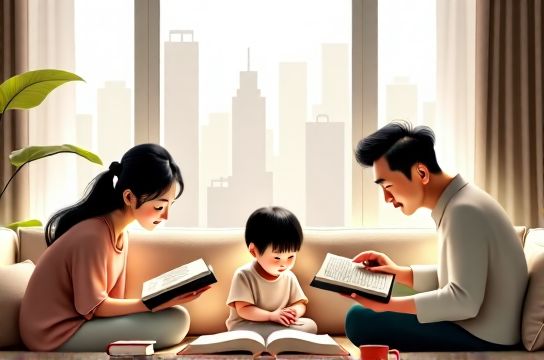
Gone are the days when every household revolved strictly around Confucian hierarchy. While respect for elders and filial piety still matter, they now coexist with individualism, career ambitions, and delayed marriages. Let me break it down with real data and observations you won’t find in textbooks.
The Big Shift: From Collectivism to Balanced Individualism
Traditional Chinese families emphasized collective well-being over personal goals. But today? Young adults are redefining success. A 2023 survey by the China Youth Research Center found that 68% of urban millennials prioritize personal fulfillment over familial expectations — up from just 42% in 2010.
This doesn’t mean they’re rejecting family. Instead, they’re renegotiating roles. Take marriage: the average age for first marriage in China hit 28.7 for women and 30.2 for men in 2023 (National Bureau of Statistics), reflecting a trend toward independence before commitment.
Education & Parental Pressure: Still Intense, But Changing
No discussion on Chinese family values is complete without addressing education. Parents still invest heavily — both emotionally and financially — in their children’s academic success. But here’s the twist: more parents now support diverse paths, including arts, entrepreneurship, or studying abroad.
Check out this snapshot from a 2022 parental attitude survey:
| Education Goal | Percentage of Urban Parents (2022) |
|---|---|
| Top-tier university (e.g., Tsinghua, Peking Univ) | 54% |
| Study abroad (US, UK, Australia) | 38% |
| Vocational training or creative careers | 29% |
| Entrepreneurship as a valid path | 41% |
Note: Percentages exceed 100% because parents selected multiple options. The takeaway? Ambition remains high, but the definition of 'success' is expanding.
Economic Pressures Reshape Family Dynamics
Rising housing costs and childcare expenses are forcing practical decisions. In Tier-1 cities like Shenzhen, nearly 60% of young couples live with parents — not just for cultural reasons, but financial necessity (China Household Finance Survey, 2023). This co-living trend is creating new dynamics: more intergenerational negotiation, shared responsibilities, and sometimes, tension.
Yet, it’s not all stress. Many families report stronger emotional bonds due to increased daily interaction — if they set clear boundaries.
Gender Roles: Progress With Limits
Women’s participation in the workforce stands at 61.5% (World Bank, 2022), but traditional expectations linger. Over 70% of household chores are still done by women, even when both partners work full-time (Pew Research, 2023). That said, younger generations are pushing back. In dual-income homes under age 35, chore-sharing rises to nearly 50/50.
Final Thoughts: Values in Motion
Modern Chinese families aren’t abandoning tradition — they’re adapting it. Filial respect evolves into emotional support rather than blind obedience. Academic pressure gives way to holistic development. And financial reality forces creativity, not just compromise.
Understanding these shifts isn’t just academic; it’s essential for educators, policymakers, and anyone building connections in China. The core value? Balance — between old and new, family and self, duty and dreams.