
Social Phenomena China Analyzing Urbanization's Human Cost
- Date:
- Views:209
- Source:The Silk Road Echo
China’s urbanization boom is nothing short of a modern miracle. In just four decades, over 600 million people have moved from rural villages to bustling cities—more than the entire population of North America. But behind the glittering skyscrapers and high-speed rail lines lies a deeper, often overlooked story: the human cost of this rapid transformation.
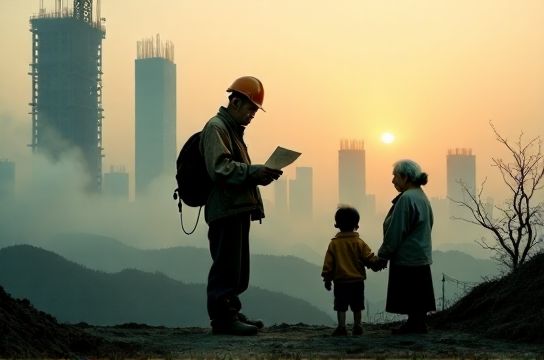
As factories hum and property developers rake in profits, millions of migrant workers—known as nongmingong (farmer-workers)—toil long hours for low pay, often separated from their families for months or even years. They’re the invisible engine of China’s economic rise, yet they remain on the fringes of the very cities they helped build.
The Hidden Price of Progress
Urbanization in China isn’t just about concrete and steel—it’s about people, policies, and paradoxes. The hukou system, China’s household registration policy, divides citizens into urban and rural categories. While it once kept migration under control, today it acts like a social barrier. Rural migrants may live in Shanghai or Shenzhen, but without a local hukou, they’re denied access to public schools, healthcare, and affordable housing.
According to the National Bureau of Statistics, China had approximately 290 million migrant workers in 2023. That’s roughly 1 in 5 Chinese adults living away from their registered hometowns. And while they contribute massively to GDP, their average monthly wage sits around ¥4,800 ($670)—barely enough to afford rent in major cities.
Family Fractures and Left-Behind Children
One of the most heartbreaking consequences? The rise of “left-behind children.” With parents working in distant cities, an estimated 6.6 million kids stay behind in villages, raised by aging grandparents. A 2022 study by Peking University found that these children face higher risks of depression, poor academic performance, and emotional neglect.
Meanwhile, elderly care systems are buckling. Rural areas lose their youth, leaving behind aging populations with limited medical access. It’s a double squeeze: cities get younger and more crowded, while villages grow older and emptier.
Breaking Down the Numbers
Let’s take a closer look at the data:
| Indicator | 2010 | 2023 | Change |
|---|---|---|---|
| Urban Population (%) | 49.7% | 65.2% | +15.5% |
| Migrant Workers (millions) | 242 | 290 | +48 million |
| Average Monthly Wage (Migrants) | ¥2,000 | ¥4,800 | +140% |
| Left-Behind Children (millions) | 68.8 | 6.6 | -62.2 million* |
*Note: Significant drop due to revised definitions and improved tracking, not necessarily improved conditions.
Is There Hope Ahead?
Yes—but progress is slow. Some cities like Hangzhou and Chengdu are piloting hukou reforms, offering partial benefits to long-term migrants. Affordable housing projects are expanding, and digital platforms are helping families stay connected. Still, systemic change remains elusive.
The truth is, China can’t sustain growth without addressing its social gaps. As one migrant worker from Henan told me: “We built the city, but the city hasn’t made room for us.”
Urbanization isn’t just a physical shift—it’s a social contract. And right now, that contract feels broken for too many.