
Unveiling Social Phenomena China Beyond Western Narratives
- Date:
- Views:270
- Source:The Silk Road Echo
When it comes to understanding modern China, many in the West still rely on outdated stereotypes or politically charged headlines. But the real story? It’s far more nuanced, vibrant, and downright fascinating. Let’s peel back the layers and explore the social phenomena shaping China today — from digital culture to urban-rural dynamics — all through a lens that goes beyond the usual narratives.
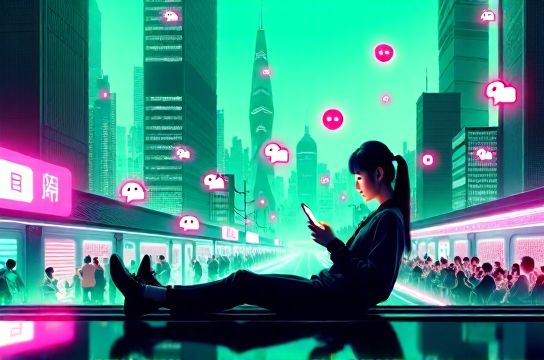
The Digital Revolution: Life in the Super App Era
Forget Facebook, Instagram, and Uber — in China, everything happens inside WeChat. With over 1.3 billion monthly active users, this 'super app' isn’t just for messaging. It’s your wallet, your doctor, your taxi, and even your government portal. This seamless integration of services reflects a society that values convenience and efficiency above all.
Meanwhile, TikTok (known as Douyin domestically) isn’t just for dance trends. It’s reshaping how people consume information, launch businesses, and even find love. In 2023, over 700 million users engaged with Douyin daily, turning influencers into overnight entrepreneurs.
| Platform | Monthly Active Users (2023) | Primary Use |
|---|---|---|
| 1.3 billion | Social + Payments + Services | |
| Douyin (TikTok China) | 750 million | Short Video + E-commerce |
| Alipay | 1.2 billion | Digital Payments |
The Rise of “Lying Flat” and Anti-Work Movements
You’ve probably heard of “tang ping” or “lying flat” — a quiet rebellion against China’s intense work culture. Young professionals, burdened by high housing costs and endless competition, are choosing minimalism and disengagement. It’s not laziness; it’s self-preservation.
A 2022 survey found that 62% of urban millennials feel overwhelmed by job pressure, and nearly 40% would consider downshifting their careers for better mental health. The government hasn’t ignored this — recent policies promote work-life balance, though change is slow.
Urbanization vs. Rural Reality
China’s cities dazzle with skyscrapers and bullet trains, but rural areas tell a different story. Over 500 million people still live in the countryside, where digital access and healthcare lag behind.
Yet innovation thrives here too. Farmers use livestreaming to sell produce directly to consumers — a trend called “live commerce.” One villager in Guizhou sold 2 million yuan worth of sweet potatoes in a single year via Douyin. Talk about bridging the gap!
Family Dynamics in Flux
The one-child policy may be gone, but its legacy lingers. Many young adults are now the sole caregivers for two parents and four grandparents — a phenomenon dubbed the “4-2-1 problem.”
And while marriage used to be non-negotiable, today’s youth are saying no. In Shanghai, the singlehood rate among women aged 30–34 hit 33% in 2023. Education, career goals, and personal freedom are redefining life paths.
Conclusion: Seeing China Clearly
China isn’t a monolith, nor is it a mirror of Western societies. Its social fabric is woven with contradictions — hyper-connectivity alongside emotional withdrawal, rapid progress paired with deep inequality. To truly understand it, we must move beyond simplified narratives and embrace complexity.
From WeChat to ‘lying flat,’ from megacities to livestreaming farmers, China’s social phenomena reveal a society in motion, reimagining itself every day.