
Mental Health Challenges in China Today
- Date:
- Views:289
- Source:The Silk Road Echo
Let’s talk about something real—mental health in China. It’s not just a trending topic; it’s a silent crisis unfolding behind closed doors. While the country races ahead in tech, economy, and global influence, millions are quietly battling anxiety, depression, and stigma.
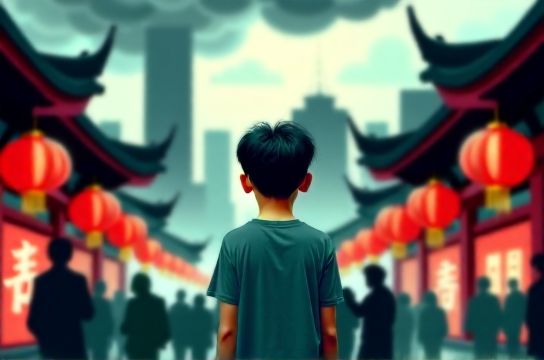
In 2023, the World Health Organization (WHO) estimated that over 95 million people in China live with depression, and around 40 million struggle with anxiety disorders. That’s roughly 7% of the population—imagine a whole city the size of Beijing suffering in silence.
But here’s the kicker: only about 1 in 10 individuals with mental health conditions receive proper treatment. Why? Because cultural stigma, lack of awareness, and limited access to care create a perfect storm of neglect.
The Stigma Factor: “Just Be Strong” Isn’t Working
In many Chinese families, mental illness is seen as a personal weakness or a family shame. Phrases like “你能不能坚强点?” (“Can’t you just be stronger?”) are common. This mindset prevents open conversations and delays help-seeking behavior.
A 2022 study published in The Lancet Psychiatry found that 60% of respondents believed people with depression could recover simply by “thinking positively.” Spoiler: they can’t. Depression isn’t a mood—it’s a medical condition.
Urban Pressure Cooker: Life in the Fast Lane
Cities like Beijing, Shanghai, and Shenzhen are economic powerhouses, but they’re also stress furnaces. The infamous “996” work culture (9 AM to 9 PM, 6 days a week) has become a symbol of burnout. A 2023 survey by Zhaopin, a major job platform, revealed that 83% of white-collar workers reported high stress levels—with mental exhaustion topping the list.
Young adults and students aren’t spared either. Academic pressure starts early. In 2021, the Ministry of Education reported that 24.6% of Chinese adolescents showed signs of depressive symptoms. The gaokao (college entrance exam) isn’t just a test—it’s an emotional marathon.
What’s Being Done? Progress on the Ground
It’s not all doom and gloom. The Chinese government has started taking steps. In 2020, the National Mental Health Action Plan set a goal: by 2030, increase public awareness and expand mental health services to cover 80% of counties.
Schools are introducing psychological counseling programs, and some companies now offer employee assistance programs (EAPs). Apps like Xinli Space and Halo Health provide online therapy, making support more accessible—especially for younger, tech-savvy users.
Key Data at a Glance
| Metric | Data | Source |
|---|---|---|
| People with depression | ~95 million | WHO, 2023 |
| People with anxiety | ~40 million | WHO, 2023 |
| Treatment gap | ~90% | The Lancet, 2022 |
| Youth depression rate | 24.6% | Ministry of Education, 2021 |
| Workforce stress level | 83% | Zhaopin Survey, 2023 |
So What Can You Do?
If you’re in China and struggling—know you’re not alone. Reach out. Talk to someone. Use online resources. And if you’re a friend, parent, or manager—listen without judgment. Sometimes, the most powerful therapy is being heard.
Mental health isn’t a Western luxury—it’s a human right. And in a society that values harmony and resilience, true strength lies not in silence, but in seeking help.