
Life Behind China's Urban Development
- Date:
- Views:179
- Source:The Silk Road Echo
Ever wondered what it feels like to stand in the shadow of a 60-story skyscraper that didn’t exist five years ago? Welcome to modern China — where cities rise faster than you can say 'infrastructure.' But beyond the steel, glass, and neon lights, there’s a human story. Let’s dive into the real life behind China’s urban development, blending speed, ambition, and everyday survival.
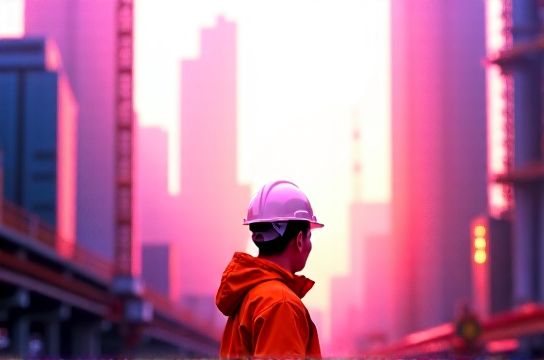
The Rise of the Megacities
China isn’t just building cities — it’s redefining them. Since 2000, over 300 million people have migrated from rural areas to urban centers. That’s like adding the entire population of the U.S. to city life — in just two decades.
Cities like Shenzhen, once a sleepy fishing village, now boast GDPs rivaling small countries. Shanghai’s skyline looks like something from a sci-fi movie, and Chongqing — home to 32 million — is the largest city by population on Earth.
By the Numbers: Urban Growth at Warp Speed
Check out this snapshot of China’s urban transformation:
| City | Population (2023) | Urbanization Rate (%) | GDP (RMB Trillion) |
|---|---|---|---|
| Shanghai | 24.9 million | 89.3% | 4.7 |
| Beijing | 21.5 million | 87.6% | 4.4 |
| Shenzhen | 17.7 million | 100%* | 3.4 |
| Chongqing | 32.0 million | 70.8% | 3.0 |
*Officially classified as fully urban due to special administrative status.
The Human Cost of Concrete Dreams
But here’s the twist: all this progress comes with trade-offs. Housing prices in Tier-1 cities are 30 times the average annual income. A tiny apartment in Beijing can cost over 10 million RMB (~$1.4M). That’s not a typo.
Meanwhile, migrant workers — the backbone of construction — often live in cramped dormitories on job sites. They build luxury towers but can’t afford to live in them. It’s poetic, in the most heartbreaking way.
Green Spaces vs. Gray Skies
Yes, China builds fast. But it’s also learning to build smarter. Over 200 sponge cities are now using permeable pavements and green roofs to manage floods. Hangzhou’s West Lake area blends tech with tradition, proving urban doesn’t have to mean soulless.
And let’s talk transport: Shanghai’s metro spans over 800 kilometers — longer than many countries’ entire rail networks. With 5G-enabled traffic lights and facial recognition for ticketing, it’s not just efficient — it’s futuristic.
So, What’s Next?
China aims for 70% urbanization by 2035. That means another 100 million people moving to cities. The challenge? Making sure growth doesn’t crush quality of life.
Innovations like modular housing, AI-driven city planning, and carbon-neutral districts are already in motion. The goal? Not just bigger cities — better ones.
At the end of the day, China’s urban boom isn’t just about cranes and concrete. It’s about families chasing opportunity, engineers solving impossible puzzles, and millions adapting to a world that changes overnight.
This is urban development with a heartbeat. And it’s only getting started.