
Decoding China's Social Trends Today
- Date:
- Views:226
- Source:The Silk Road Echo
If you're trying to understand modern China, forget the textbooks—head straight to the streets, the screens, and the shopping carts. Over the past few years, Chinese society has transformed at a pace that leaves even tech CEOs breathless. From digital nomads in Chengdu to livestream shopping sprees at midnight, the social trends shaping China today are as dynamic as they are data-driven.
The Rise of Guochao: When Tradition Meets Hype
"Guochao," or "China Chic," isn’t just a fashion statement—it’s a cultural movement. Young consumers are ditching Western luxury brands for homegrown labels like Li-Ning, Perfect Diary, and Shanghai Tang. Why? National pride meets smart marketing. According to McKinsey & Company, over 70% of Gen Z in China prefer domestic brands if quality is comparable.
| Brand | YoY Growth (2023) | Primary Audience |
|---|---|---|
| Perfect Diary | 42% | Gen Z (18–25) |
| Li-Ning | 36% | Urban Millennials |
| Heytea | 55% | Tier 1 & 2 Cities |
This isn’t nostalgia—it’s reinvention. Think embroidered sneakers, hanfu-inspired streetwear, and skincare lines using ancient herbal formulas with TikTok-friendly packaging.
Digital Life, Real Impact
In China, your digital identity isn’t just online—it shapes your real-world access. The integration of apps like WeChat, Alipay, and Douyin into daily life goes beyond convenience. Did you know the average Chinese user spends 3.5 hours daily on mobile apps? And 68% have used facial recognition for payments (source: CNNIC, 2023).
Livestream commerce is another game-changer. In 2023, it generated over $489 billion in sales—more than the entire e-commerce market of most countries. Influencers like Li Jiaqi (“Lipstick King”) can sell out 10,000 units in under a minute.
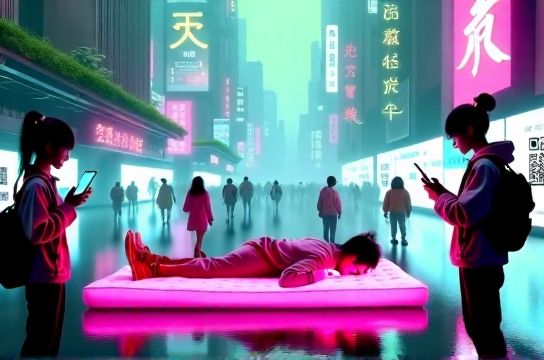
Social Pressures & The 'Lying Flat' Movement
But beneath the glittering skyline of Shenzhen and the viral dance challenges lies a growing sense of burnout. The term "Tang Ping" or "lying flat" went viral as a response to relentless work culture. A 2023 survey by Zhaopin.com found that 43% of urban professionals aged 22–35 feel "chronically exhausted."
Yet, lying flat doesn’t mean giving up—it’s a redefinition of success. Many young people are opting for freelance gigs, moving to smaller cities, or starting eco-farms. It’s not laziness; it’s seeking balance in a high-speed society.
Green Living Goes Mainstream
Eco-consciousness is no longer niche. With government targets pushing for carbon neutrality by 2060, sustainability is trending. Electric vehicle giant BYD sold over 3 million units in 2023—surpassing Tesla globally. Bike-sharing and zero-waste stores are popping up in cities from Hangzhou to Xi’an.
Even food trends reflect this shift. Plant-based meat sales grew by 38% last year, and apps like Ant Forest have turned carbon tracking into a social game—with over 600 million users collectively planting 300 million trees.
What This Means for Observers
China’s social trends aren’t just local quirks—they’re blueprints for the future. Whether you’re a marketer, traveler, or policymaker, understanding these shifts offers real insight. The fusion of tradition and tech, the pushback against hustle culture, and the rise of conscious consumption—all point to a society reimagining its values.
So next time you see a teen in a hanfu dress ordering bubble tea via facial recognition, remember: you’re not just witnessing a moment. You’re seeing the future unfold.