
Public Transport as a Mirror of Chinese Society
- Date:
- Views:363
- Source:The Silk Road Echo
If you've ever stood on a Beijing subway platform at 8:07 a.m., squeezed between commuters like sardines in a high-speed can, you've felt it — the pulse of modern China. Public transport here isn't just about getting from point A to B; it's a living, breathing reflection of society itself: crowded, efficient, evolving, and deeply symbolic.
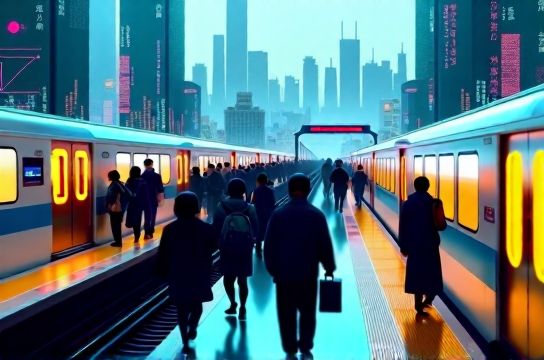
China’s public transit systems are among the most advanced and heavily used in the world. With over 800 million daily trips on urban transport (2023 data), the numbers aren’t just impressive — they’re telling a story.
The Numbers Don’t Lie: Transit by the Data
Let’s break it down with some hard stats:
| City | Daily Ridership (Million) | Subway Length (km) | Bus Fleet Size |
|---|---|---|---|
| Beijing | 12.5 | 783 | 24,000 |
| Shanghai | 11.8 | 831 | 19,500 |
| Guangzhou | 9.2 | 621 | 14,300 |
| Chengdu | 6.1 | 558 | 10,200 |
These aren’t just transportation hubs — they’re social ecosystems. The metro doesn’t discriminate: CEOs swipe their transit cards next to migrant workers, students, and retirees. In that shared space, hierarchy blurs — at least for the 20-minute ride.
Efficiency vs. Equity: The Great Balancing Act
China’s government has invested over $300 billion in urban rail since 2010. That’s not charity — it’s strategy. As cities swell (Shanghai now houses over 26 million people), mass transit keeps the engine running.
But here’s the twist: while first-tier cities boast driverless trains and facial recognition gates, smaller cities still rely on aging buses and overcrowded minibuses. This gap mirrors China’s broader urban-rural divide — progress is real, but uneven.
Culture in Motion: What Rides Reveal
- Etiquette under pressure: Despite the crush, it’s common to see younger riders giving up seats to elders — a quiet nod to Confucian values.
- Digital integration: From WeChat QR codes to Alipay-linked transit cards, tech adoption is seamless. Over 95% of riders use mobile payments.
- Social control? Yes, cameras and AI monitoring are everywhere — raising debates about privacy vs. safety.
In many ways, the subway is China’s great equalizer — until it isn’t. Premium carriages, reserved seating, and high-speed rail VIP lounges hint at growing class stratification, even in public spaces.
The Future: Green, Smart, and Crowded
By 2030, China plans to have over 15,000 km of urban rail nationwide. Electric buses already make up 70% of fleets in major cities, slashing emissions. And innovations like Chengdu’s ‘sunflower’ solar-powered stations show how sustainability is taking root.
Yet challenges remain: congestion, affordability, and accessibility for the elderly. As one Shenzhen commuter told me: “The train gets me to work fast, but sometimes I feel invisible in the crowd.”
That’s the paradox of Chinese public transport: it moves millions forward, yet personal space — physically and socially — is shrinking.
In the end, riding the metro in China is more than a commute. It’s a daily lesson in order, endurance, and the relentless pace of change. The tracks don’t just connect stations — they trace the contours of a nation racing toward tomorrow, together.