
Rural Migration and Identity in Modern China
- Date:
- Views:295
- Source:The Silk Road Echo
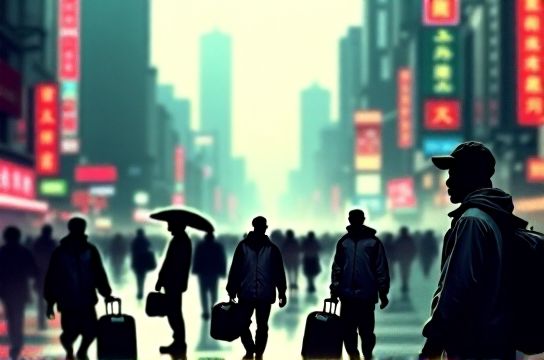
In modern China, the story of rural migration isn’t just about people moving from villages to cities—it’s a sweeping human drama of identity, ambition, and transformation. Over the past four decades, China has witnessed the largest internal migration in human history. More than 290 million rural migrants now live in urban areas, making up nearly 40% of China’s city dwellers (National Bureau of Statistics, 2023). These are not just numbers—they represent parents separated from children, dreams packed in second-hand suitcases, and identities caught between two worlds.
The Great Urban Pull
Why do so many leave their ancestral homes? The answer lies in opportunity. Cities promise higher wages, better schools, and a shot at the ‘Chinese Dream.’ A farmer in Henan might earn ¥3,000 monthly, but in Shenzhen, that same person can make over ¥6,000 in factory or service jobs. Yet, this economic leap comes with emotional cost.
Identity in Limbo
Despite living in cities for years, many rural migrants remain legally and socially excluded. The hukou (household registration) system ties social benefits—like healthcare and education—to one’s birthplace. Without an urban hukou, migrant children often can’t attend public schools or take college entrance exams locally.
This creates a paradox: physically present but institutionally invisible. As one migrant worker in Guangzhou put it, “I build the city, but the city doesn’t recognize me.”
Data Snapshot: Rural Migrants in Chinese Cities
| Indicator | Value (2023) | Source |
|---|---|---|
| Total Rural Migrant Population | 290 million | NBS |
| Average Monthly Income (Urban vs Rural) | ¥6,382 vs ¥3,150 | NBS |
| Migrants with Local Hukou Access | < 25% | China Labor Bulletin |
| Children Left Behind in Villages | Approx. 6.9 million | UNICEF China |
Cultural Tug-of-War
Migration also reshapes personal identity. Young migrants adopt city slang, fashion, and values—but often feel out of place back home. Elders may see them as ‘too flashy,’ while urbanites label them ‘country bumpkins.’ This cultural in-betweenness breeds quiet alienation.
Yet, resilience shines through. Community groups, migrant-run churches, and WeChat networks help preserve belonging. Some even return home to start businesses, bringing city skills to rural revitalization.
The Road Ahead
Reform is slowly coming. Cities like Chengdu and Hangzhou have eased hukou rules, offering pathways to residency. Still, full integration remains distant. For real change, China must balance economic growth with human dignity.
Rural migration isn’t just a policy challenge—it’s a mirror reflecting who China wants to become. Will it be a nation of inclusion, where every builder of the skyline can also call it home?