
How Education Drives Inequality in Chinese Cities
- Date:
- Views:399
- Source:The Silk Road Echo
In the bustling streets of Beijing, Shanghai, and Shenzhen, a silent force is shaping the future of millions: education. But here's the twist — while education is often seen as the great equalizer, in China’s urban landscape, it’s increasingly becoming a driver of inequality. Let’s dive into how this paradox unfolds.
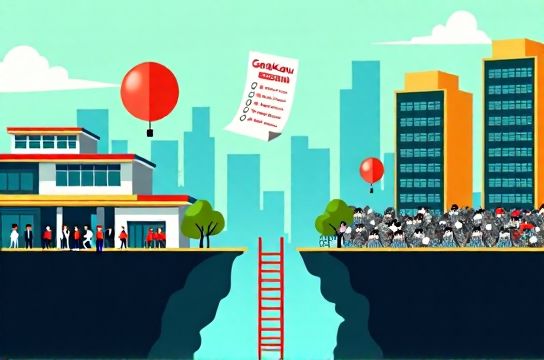
At first glance, China has made massive strides in education. Over 95% of urban youth now complete senior secondary education, according to UNESCO (2023). Sounds impressive, right? But beneath these numbers lies a deeper divide — one shaped by household registration (hukou), school district policies, and access to elite institutions.
The Hukou Hang-Up
If you’re born with a rural hukou, even living in Shanghai or Guangzhou doesn’t guarantee your child can attend public high school there. Migrant families — over 380 million people strong — face steep barriers. Only about 40% of migrant children in cities attend local public schools. The rest are funneled into underfunded private or informal schools with fewer resources and lower quality teaching.
| Urban Area | % Migrant Children in Public Schools | Average Class Size |
|---|---|---|
| Shanghai | 37% | 45 students |
| Beijing | 42% | 48 students |
| Chengdu | 56% | 52 students |
| Shenzhen | 39% | 50 students |
As you can see, access varies — but nowhere is it close to equal. And when it comes to college entrance exams? Forget it. Most provinces require students to take the Gaokao where their hukou is registered. So even after years in a top-tier city school, a student might have to return to a rural province with tougher competition and lower admission thresholds.
School Districts & Skyrocketing Housing Prices
Then there’s the real estate angle. In cities like Beijing, which primary school you attend depends on where you live — literally. Homes in districts with top schools can cost 2–3 times more than identical units just blocks away. We’re talking prices hitting 1.5 million USD for tiny apartments with no kitchens — all for a shot at Peking University附属小学 (a top feeder school).
This creates a cycle: wealthy families buy access to better education, their kids dominate the Gaokao, land elite jobs, and reinvest in property. Meanwhile, working-class families get stuck in under-resourced schools with less experienced teachers and outdated materials.
The Private Tutoring Boom
After-school tutoring was once a side hustle. Now, it’s an industry worth over $120 billion. Pre-‘double reduction’ policy (2021), urban families spent an average of 15–20% of their income on extracurricular learning. High-income households could afford one-on-one tutors, AI-driven platforms, and overseas prep programs. Low-income families? They couldn’t keep up.
Even after strict regulations, shadow education persists through underground networks and online platforms, maintaining the gap.
So What’s the Way Forward?
True equity means reforming hukou, funding schools based on need, not location, and expanding national college admission quotas for disadvantaged groups. Some pilot programs in Hangzhou and Chengdu are testing portable education credits for migrant families — early results show promise.
Education shouldn’t be a privilege reserved for the well-connected. In China’s glittering cities, it’s time to stop using schools as tools of division — and start rebuilding them as bridges.