
Why ‘Breaking the Fourth Wall’ Resonates in Chinese Online Discourse
- Date:
- Views:316
- Source:The Silk Road Echo
You’ve probably seen it before — a character suddenly turns to the camera, winks, and drops a sarcastic comment that feels way too real. That’s ‘breaking the fourth wall,’ and while it started in Western theater and film, it’s blowing up in a whole new way across Chinese social media. From viral skits on Douyin to meme-heavy Weibo threads, this once-theatrical device is now a cultural reflex — and honestly? It’s kind of genius.
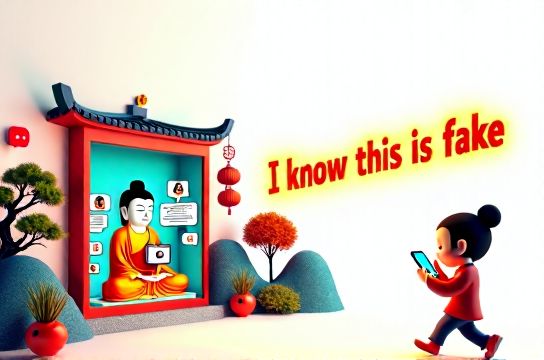
So why’s this trend hitting different in China? Well, it’s not just about humor. It’s about connection. In a digital landscape packed with polished influencers and scripted content, breaking the fourth wall feels like a breath of fresh air. It’s like the creator is saying, ‘Hey, I see you, we’re both in on this joke.’ And for young Chinese netizens drowning in performative online personas, that authenticity is everything.
Take the rise of ‘self-aware’ comedy sketches. A student ‘struggling’ to finish homework might pause mid-scene, stare into the lens, and deadpan: ‘If I fail the exam, at least my mom will still love me… right?’ The audience cracks up — not just because it’s funny, but because it’s relatable. That moment of eye contact? That’s the fourth wall shattering. It pulls viewers out of passive scrolling and into a shared emotional space.
And let’s be real — Chinese internet culture *loves* meta-commentary. Whether it’s mocking dating show tropes or roasting exaggerated KOL (Key Opinion Leader) behavior, users are obsessed with calling out the absurdity of online life. Breaking the fourth wall becomes a tool for satire, letting creators highlight the gap between real life and digital performance without saying it outright.
Even brands are jumping on this. Some local campaigns now feature actors who wink at the camera mid-ad, acknowledging the commercial nature of the content. Instead of pretending to be ‘organic,’ they lean into the artifice — and somehow, it builds more trust. Crazy, right?
But there’s also a deeper layer. In a society where indirect communication is often preferred, this directness — even if playful — feels rebellious. It’s a subtle nod to individuality in a world that values conformity. By breaking the wall, creators aren’t just telling jokes — they’re reclaiming narrative control.
Of course, it’s not always deep. Sometimes it’s just a quick ‘this script is terrible’ muttered into the camera. But even those moments matter. They keep things human in an increasingly algorithm-driven space.
So yeah, breaking the fourth wall isn’t just a gimmick in China — it’s a language. One that speaks to irony, intimacy, and the collective eye-roll at modern digital life. And as long as people crave realness in a filtered world, this trend? It’s not going anywhere.