
Hukou and Hope: Systemic Barriers Facing China’s Floating Population
- Date:
- Views:413
- Source:The Silk Road Echo
In the sprawling cities of Beijing, Shanghai, and Shenzhen, millions work tirelessly—building skyscrapers, delivering meals, teaching in private schools. Yet, despite their contributions, a significant portion live in legal limbo. Welcome to the world of China’s floating population: over 380 million people who’ve left their rural hometowns in search of opportunity but remain locked out of full urban citizenship due to the hukou system.
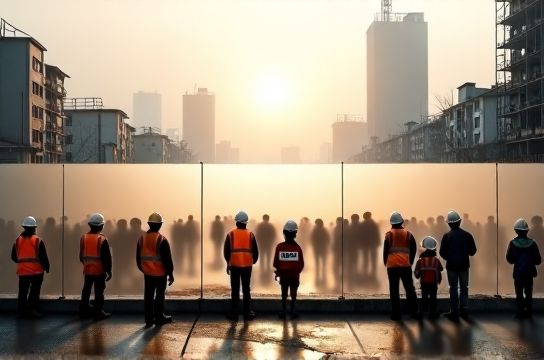
The hukou, or household registration system, dates back to the 1950s. Originally designed to control migration and allocate resources, it now acts as a gatekeeper to public services. If your hukou isn’t registered in a city, you’re often denied access to public education, subsidized healthcare, and affordable housing—even if you’ve lived there for decades.
The Human Cost Behind the Numbers
Consider this: as of 2023, 384 million Chinese are classified as internal migrants—more than the entire population of the U.S. About 74% of them hold rural hukou status. These aren’t just statistics; they’re parents watching their kids grow up in cramped apartments, unable to enroll in local schools without paying exorbitant fees.
| Year | Floating Population (Million) | % with Rural Hukou | Main Destinations |
|---|---|---|---|
| 2018 | 241 | 76% | Guangdong, Zhejiang, Jiangsu |
| 2021 | 324 | 75% | Beijing, Shanghai, Shenzhen |
| 2023 | 384 | 74% | Pearl River Delta, Yangtze River Delta |
That’s a 59% increase in just five years. Urban economies thrive on this labor, yet the system fails to integrate these workers fully.
School’s Out—for Some Kids
One of the cruelest impacts? Education. Over 80% of migrant children attend underfunded private or informal schools. In Shanghai, only 30% of eligible migrant kids can access public primary schools. Why? Quotas. Limited spots. And yes—hukou restrictions.
“We pay taxes, we work hard, but our kids can’t take the local high school exam,” says Li Mei, a factory worker from Anhui now living in Suzhou. “It feels like second-class citizenship.”
Healthcare: A Pay-As-You-Go Reality
Public hospitals prioritize locals. Migrants often face higher fees or are forced to return to their hukou所在地 (home region) for insurance claims—a logistical nightmare. According to the National Health Commission, only 42% of floating residents are covered by urban medical insurance.
Recent Reforms: Glimmers of Hope?
In 2022, several medium-sized cities relaxed hukou rules, offering residency points for skilled laborers. But major hubs like Beijing and Shanghai remain tightly controlled. Tier-1 cities require years of tax payments, social security contributions, and sometimes property ownership—barriers most low-income migrants can’t clear.
The central government aims for 70% urbanization by 2035. But without hukou reform, that dream stalls. Economists estimate that full integration could boost GDP growth by 1–1.5 percentage points annually.
What Needs to Change?
- Decouple public services from hukou status—healthcare, schooling, housing should follow the person, not the paper.
- Expand point-based systems fairly, especially for long-term contributors.
- Invest in migrant-inclusive urban planning, not just flashy skylines.
The floating population isn’t temporary. They’re the backbone of modern China. The question isn’t whether the hukou system can adapt—it’s whether China’s cities have the moral courage to redefine belonging.