
Public Transport and Urban Social Dynamics
- Date:
- Views:323
- Source:The Silk Road Echo
Ever missed the last bus home and ended up sharing a cab with a total stranger who told you life-changing advice? Yeah, public transport isn’t just about getting from A to B—it’s where cities breathe, connect, and sometimes argue over seat space. Let’s dive into how buses, subways, and trams shape not just commutes, but social dynamics in urban life.
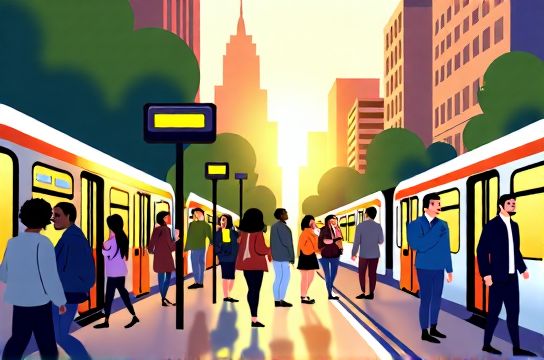
The Pulse of the City: More Than Just Rides
Public transportation is the circulatory system of any major city. According to the International Association of Public Transport (UITP), over 80% of urban trips in cities like Tokyo, Paris, and Hong Kong rely on public transit. But beyond moving bodies, it moves ideas, cultures, and opportunities.
In places like Bogotá, Colombia, the TransMilenio bus rapid transit system didn’t just reduce commute times—it became a social equalizer. Low-income residents gained access to jobs, education, and healthcare previously out of reach. That’s not just efficiency; that’s empowerment.
Riding Together, Living Closer?
Think about your daily ride. Who do you see? Office workers, students, street vendors, tourists—all crammed together, if only for a few stops. This forced proximity fosters what sociologists call “casual contact”: brief but meaningful interactions that build urban tolerance.
A 2022 study by MIT found that cities with higher public transit usage report 15–20% greater social cohesion compared to car-dependent areas. Why? Because when people share space regularly, even silently, they develop a sense of shared urban identity.
Data Doesn’t Lie: Transit Shapes Society
Let’s break it down with some real numbers:
| City | Transit Mode Share (%) | Avg. Commute Time (min) | Social Trust Index* |
|---|---|---|---|
| Tokyo | 61% | 47 | 7.8 |
| New York | 56% | 55 | 6.9 |
| Mexico City | 72% | 63 | 5.4 |
| Los Angeles | 12% | 68 | 5.1 |
*Social Trust Index measures perceived trust among citizens (scale 1–10), based on World Values Survey.
Notice a pattern? Higher transit use often correlates with stronger social metrics—even if commutes are long.
The Dark Side: Inequality on the Rails
But let’s keep it real—not all transit stories are uplifting. In many cities, public transport reinforces inequality. Take London: while the Tube connects wealthy West End to East London’s lower-income neighborhoods, service frequency and cleanliness often differ drastically by zone.
In Johannesburg, the Rea Vaya bus system was praised for innovation but criticized for bypassing informal settlements—leaving the poorest residents stranded. Access doesn’t always mean inclusion.
Design Matters: How Layout Influences Interaction
Believe it or not, the design of a subway car affects how we treat each other. Open layouts with central aisles (like Berlin’s U-Bahn) encourage eye contact and subtle social cues. In contrast, rows of forward-facing seats (common in North America) create silent isolation.
Cities like Copenhagen have started designing “social seating”—benches that face each other, encouraging conversation. Small change? Maybe. But in a world where loneliness is rising, these details matter.
The Future: Mobility as a Social Glue
As cities grow, so does the need for transit that doesn’t just move people—but connects them. Autonomous shuttles, integrated fare systems, and green transit corridors aren’t just tech upgrades—they’re tools for building more inclusive communities.
Imagine a bus route that doubles as a mobile library or health clinic. It’s already happening in Medellín, where cable cars link hillside slums to city services—and to dignity.
Final Stop: More Than Metal and Tracks
Public transport shapes cities, yes. But deeper down, it shapes us—how we see others, how we share space, how we belong. The next time you board a crowded train, look around. You’re not just commuting. You’re part of a living, breathing social network on wheels.