
Language Shifts Among China's Young Speakers
- Date:
- Views:264
- Source:The Silk Road Echo
In today’s fast-paced, hyper-connected China, the way young people speak is changing—fast. From bustling Beijing to coastal Shenzhen, a quiet linguistic revolution is underway. Mandarin still reigns supreme, but digital slang, English loanwords, and regional dialect blending are reshaping how Gen Z communicates. Let’s dive into this fascinating language shift with data, insights, and a bit of Gen Z flair.
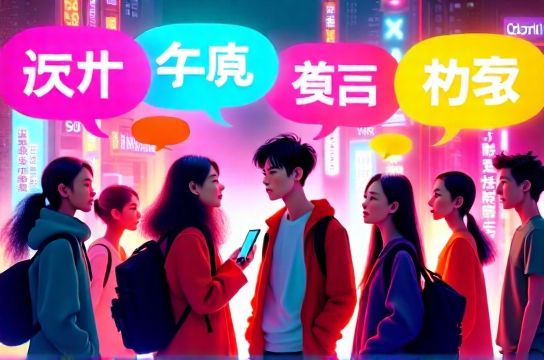
The Rise of Digital Dialects
Gone are the days when formal Mandarin ruled every chat. Today’s youth sprinkle their speech with internet-born phrases like zhen xiang (‘so real’), baodi (‘low-key cool’), and nei ge jiu (‘you know the one’). These aren’t just jokes—they’re identity markers. According to a 2023 survey by Peking University, over 68% of urban teens use at least three internet slang terms daily.
Bilingual or Bi-Cultural?
English isn’t just a school subject anymore—it’s part of the lifestyle. A recent Ministry of Education report shows that 41% of Chinese students in grades 9–12 can hold basic conversations in English, up from 27% a decade ago. But it’s not just fluency—it’s fusion. Words like fan si (from 'fans') or kafei time pop up naturally in casual talk.
| Age Group | % Using English Loanwords Daily | Top 3 Loanwords |
|---|---|---|
| 15–18 | 54% | cool, fan, selfie |
| 19–22 | 63% | deadline, vibe, flex |
| 23–26 | 49% | startup, hack, inbox |
Dialects Fading or Evolving?
You might think regional tongues like Cantonese or Shanghainese are dying out. Not quite. While only 29% of teens speak a dialect at home (down from 51% in 2000), many mix dialect words into Mandarin for humor or local pride. In Guangdong, lei hei (‘you’re so funny’) slips into WeChat chats effortlessly.
Social Media: The New Language Lab
Platforms like Douyin (TikTok) and Xiaohongshu are where trends go viral—and language evolves overnight. A single meme can birth dozens of new phrases. For example, the phrase wansui wansui wanwansui (‘forever and ever’) exploded after a viral livestream, now used ironically by millions.
What Does This Mean for the Future?
Linguists predict a hybrid future: Standard Mandarin remains essential for education and official life, but informal speech will keep absorbing global influences. Code-switching between Mandarin, English, and digital slang isn’t confusion—it’s fluency in modern culture.
So next time you hear a Chinese teen say wo qu ni jia kan nba (‘I’m coming to your place to watch NBA’), don’t be surprised. That sentence—half Mandarin, half English—isn’t broken. It’s the new normal.