
Urbanization and Its Social Effects in China
- Date:
- Views:366
- Source:The Silk Road Echo
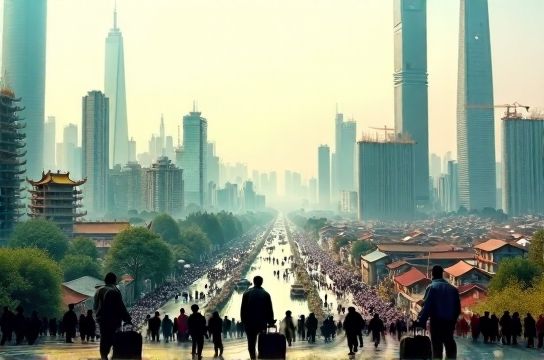
China's urbanization over the past four decades has been nothing short of a global phenomenon. From sleepy villages to megacities like Shanghai and Shenzhen, the country has transformed at lightning speed. But what does this rapid urban growth really mean for everyday people? Let’s dive into the numbers, stories, and social shifts behind China’s urban boom.
The Big Picture: By the Numbers
In 1980, only about 19% of China’s population lived in cities. Flash forward to 2023, and that number has skyrocketed to over 65%—that’s more than 900 million urban dwellers. To put it in perspective, that’s roughly three times the entire population of the United States now living in Chinese cities.
Here’s a snapshot of key milestones:
| Year | Urban Population (%) | Major Policy or Event |
|---|---|---|
| 1980 | 19% | Deng Xiaoping launches economic reforms |
| 2000 | 36% | "Go West" development campaign begins |
| 2010 | 49% | Shanghai hosts World Expo, showcasing modernity |
| 2023 | 65.2% | National New-Type Urbanization Plan in action |
Jobs, Migration, and the Hukou Headache
One of the biggest drivers? Opportunity. Millions have moved from rural areas to cities chasing factory jobs, tech gigs, or street-food stalls. But here’s the catch: not everyone gets equal access to city life thanks to the hukou system—a household registration policy that ties social benefits (like healthcare and education) to your hometown.
Today, around 290 million people are internal migrants—working in cities but still legally classified as rural residents. That means their kids might not be able to attend public schools or see a doctor without paying out of pocket. Talk about a social squeeze.
Cities Are Changing—For Better and Worse
On the bright side, urbanization has lifted millions out of poverty. City dwellers earn, on average, 3.2 times more than their rural counterparts. Public transit? Insane. Beijing’s subway stretches over 783 km, and Shanghai isn’t far behind. High-speed rail connects cities in hours, not days.
But rapid growth has its downsides. Air pollution, housing shortages, and skyrocketing rents plague major hubs. In Beijing, the average home price hit 68,000 RMB per square meter in 2023—making ownership a distant dream for many young workers.
The Human Side: Stories Behind the Stats
Take Li Wei, a construction worker from Henan. He’s lived in Guangzhou for 12 years, helped build skyscrapers, but still can’t get his daughter into a local public school. So she stays back in the village with grandparents. He calls every Sunday. This is the hidden cost of progress.
Yet, there’s hope. The government is pushing "new-type urbanization," aiming to make cities more inclusive by 2035. Over 100 million migrants could gain full urban rights in the next decade. Smaller cities are being upgraded to ease pressure on giants like Beijing and Shenzhen.
What’s Next?
Urbanization isn’t slowing down. Experts predict China’s urban population will stabilize around 75-80% by 2035. The focus now? Not just building taller, but building smarter and fairer.
Smart cities powered by AI, greener buildings, and more equitable policies could redefine what it means to be "urban" in China. The journey’s far from over—but the direction is clear.