
Hukou and Inequality: How a Household Registration System Shapes Opportunity
- Date:
- Views:357
- Source:The Silk Road Echo
Let’s talk about something that doesn’t get enough global attention but affects over a billion people in China — the hukou system. Sounds technical, right? But in real life, it’s more like an invisible barrier that decides where you can live, what kind of job you can get, and even whether your kid can go to a decent school in a big city.
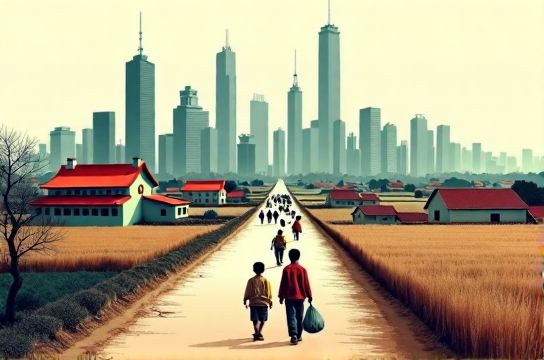
So what exactly is hukou? Think of it as a household registration system. When you’re born in China, you get a hukou tied to a specific location — usually where your parents are registered. It’s not just about paperwork; it comes with access (or lack thereof) to public services like healthcare, education, housing, and social welfare. If your hukou says "rural Sichuan," but you’re working in Shanghai, guess what? You’re basically a second-class citizen in that shiny metropolis.
Here’s the kicker: this system was created back in the 1950s to control population movement and support state planning. Fast forward to today, and it still shapes inequality in massive ways. Migrant workers — and there are hundreds of millions of them — leave their villages for cities chasing better jobs. But without a local urban hukou, they can’t fully enjoy city benefits. Their kids might have to take the college entrance exam back in the countryside, even if they’ve lived in Beijing their whole lives. Talk about unfair.
And let’s be real — this isn’t just bureaucratic red tape. It’s structural inequality baked into policy. Urban hukou holders get priority for schools, hospitals, even marriage registrations. Meanwhile, rural hukou holders face limited opportunities no matter how hard they work. The gap between rich cities and poor villages keeps widening, and hukou plays a big role in keeping that divide alive.
Some cities have tried reforms — like Guangzhou or Hangzhou easing hukou rules for skilled workers — but progress is slow and often favors the elite. If you’re not highly educated or don’t own property, good luck getting that upgrade. For most, the dream of equal opportunity stays just out of reach.
Now, why should you care? Because systems like hukou show how government policies can silently shape lives for generations. It’s not just China, either — plenty of countries have hidden barriers that favor certain groups. But in China, the scale is enormous, and the impact is deeply personal.
The bottom line? Hukou isn’t just about where you’re registered. It’s about who gets a shot at a better life. And until it’s reformed in a fair, inclusive way, inequality will keep growing — one stamped document at a time.