
Neijuan and Its Impact on Chinese Work Culture
- Date:
- Views:281
- Source:The Silk Road Echo
In today’s fast-evolving Chinese work culture, one term has taken center stage: neijuan, or 'involution.' It's not just a buzzword—it’s a societal phenomenon shaping how millions live, work, and breathe under pressure. But what exactly is neijuan? And why does it matter to employees, employers, and even global businesses eyeing the Chinese market?
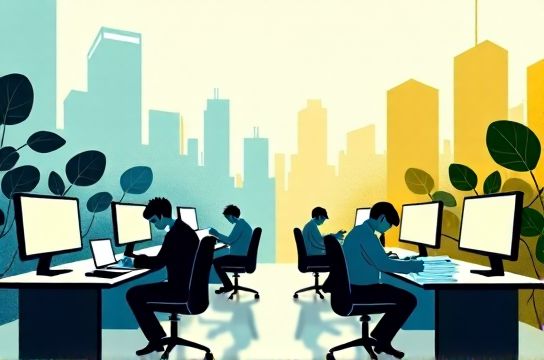
Neijuan describes a situation where individuals or organizations overwork themselves without meaningful progress—like running faster on a treadmill that goes nowhere. In China’s hyper-competitive job market, this manifests as longer hours, relentless performance targets, and a constant fear of falling behind. The result? Burnout, mental fatigue, and a paradoxical decline in real productivity.
A 2023 survey by Zhaopin, one of China’s largest job platforms, found that 68% of white-collar workers reported working overtime regularly, with nearly half saying they felt 'trapped' in their roles due to internal competition. This isn’t just about ambition—it’s systemic pressure.
The Neijuan Effect: By the Numbers
To understand the scale, here’s a snapshot of key data across major industries:
| Industry | Avg. Weekly Hours | Overtime Rate (%) | Employee Satisfaction |
|---|---|---|---|
| Tech (e.g., Alibaba, Tencent) | 52 | 74% | 5.8/10 |
| Finance & Banking | 49 | 65% | 6.1/10 |
| Education (Private Sector) | 55 | 81% | 4.9/10 |
| Manufacturing (Management) | 47 | 58% | 6.3/10 |
As you can see, sectors like private education and tech are hotspots for neijuan culture. Employees aren’t just working more—they’re competing harder for promotions, bonuses, and even basic job security.
Why Does Neijuan Happen?
Several forces fuel this cycle. First, a surplus of highly educated talent means employers can demand more. Second, rapid economic growth has created a 'hustle worship' mentality—long hours are seen as a sign of dedication. Third, limited upward mobility forces people to fight for fewer top roles, turning workplaces into invisible battlegrounds.
But here’s the twist: despite all this effort, innovation isn’t rising proportionally. A PwC report noted that while R&D spending in China grew by 10% annually from 2018–2022, patent quality and breakthrough innovations lagged behind countries like the U.S. and Germany. Why? Because neijuan rewards repetition, not creativity.
Pushback: The Anti-Neijuan Movement
Luckily, resistance is growing. Younger workers are embracing “tang ping” (lying flat) and “jiayou but not jianxian” (cheer on, don’t overwork). Companies like ByteDance have experimented with 4-day workweeks, and some startups now measure output by results, not hours logged.
Experts suggest sustainable models could include flexible KPIs, mental health support, and leadership training focused on empathy. As one HR manager in Shanghai put it: 'We used to hire for stamina. Now we hire for resilience and balance.'
Ultimately, overcoming neijuan isn’t about working less—it’s about working smarter. For global teams collaborating with Chinese partners, understanding this cultural shift is crucial. Respect local drive, but advocate for healthy boundaries. The future of work in China may not be about who runs fastest, but who runs sustainably.