
Green Spaces and Urban Wellbeing in China
- Date:
- Views:229
- Source:The Silk Road Echo
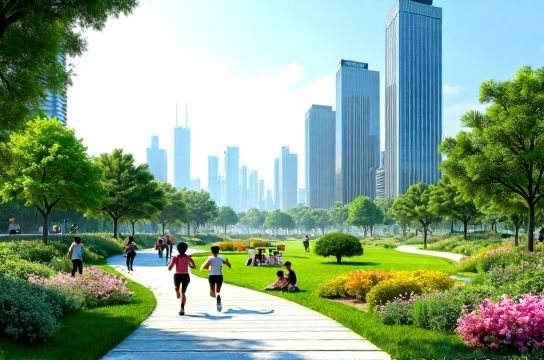
In the hustle and bustle of China’s megacities, where skyscrapers tower over crowded streets, a quiet revolution is blooming—literally. From Shanghai’s century-old parks to Shenzhen’s futuristic green belts, urban green spaces are no longer just decorative afterthoughts. They’re becoming vital lifelines for mental health, physical activity, and social connection. Let’s dive into how China is re-greening its cities and why it matters more than ever.
The Rise of Urban Greening
China’s rapid urbanization has brought economic growth—but at a cost. Air pollution, noise, and stress levels have soared. In response, city planners are turning to nature-based solutions. According to the Ministry of Housing and Urban-Rural Development, Chinese cities added over 130,000 hectares of green space between 2016 and 2022. That’s like adding 180,000 soccer fields of parks, rooftop gardens, and tree-lined avenues.
Cities like Chengdu and Hangzhou lead the charge with their ‘park city’ models, blending nature into urban design. The goal? At least 45% green coverage in major urban areas by 2030.
Why Green = Healthy
It’s not just about looks. Studies show that people living within 300 meters of a park report 23% lower stress levels and 15% higher physical activity rates. A 2023 Peking University study found that daily exposure to greenery reduced symptoms of anxiety and depression by nearly 30% in urban residents.
Here’s a snapshot of how different cities are performing:
| City | Green Space per Capita (㎡) | Air Quality Index (AQI) Avg. | Resident Wellbeing Score (out of 10) |
|---|---|---|---|
| Shanghai | 8.2 | 78 | 6.5 |
| Shenzhen | 16.7 | 52 | 8.1 |
| Chengdu | 14.3 | 64 | 7.8 |
| Beijing | 11.5 | 91 | 6.0 |
Notice a trend? More green space often means cleaner air and happier people.
Innovative Approaches Taking Root
China isn’t just planting trees—it’s reimagining urban ecosystems. Take the ‘Sponge City’ initiative, now active in over 30 cities. These projects use permeable pavements, rain gardens, and wetlands to absorb stormwater, reduce flooding, and cool urban heat islands. In Xiamen, this approach cut summer temperatures by up to 2°C.
Then there’s the ‘Vertical Forest’ concept making waves in Nanjing, where two towers covered in 23,000 plants absorb 25 tons of CO₂ annually and produce enough oxygen for 30 people every day. Talk about high-rise harmony!
Challenges and the Road Ahead
Despite progress, disparities remain. Wealthier districts often enjoy lush parks, while older neighborhoods lag behind. Maintenance costs and land scarcity also pose hurdles. But public demand is growing—over 70% of urban residents say access to green space should be a basic right.
The future? Smarter, greener, and more inclusive. With AI-powered irrigation systems and community-led garden projects on the rise, China’s cities are learning to breathe again—one tree at a time.