
Urbanization and Its Social Consequences in China
- Date:
- Views:237
- Source:The Silk Road Echo
China's urbanization journey over the past four decades is nothing short of a modern miracle. Since the economic reforms began in 1978, more than 600 million people have moved from rural areas to cities — the largest human migration in history. But behind this staggering growth lies a complex web of social consequences that are reshaping Chinese society in profound ways.
The Urban Surge: By the Numbers
In 1980, only about 19% of China’s population lived in urban areas. Fast forward to 2023, and that number has skyrocketed to over 65%. With megacities like Shanghai (27 million), Beijing (22 million), and Shenzhen (18 million) expanding at breakneck speed, the urban landscape is transforming — but not without cost.
| Year | Urban Population (%) | Total Urban Residents (Million) | Major Policy Milestone |
|---|---|---|---|
| 1980 | 19% | 191 | Economic Reforms Begin |
| 2000 | 36% | 459 | 'Go West' Development Strategy |
| 2010 | 49% | 666 | New Urbanization Plan Drafted |
| 2023 | 65.2% | 914 | Sustainable Urban Growth Focus |
The Human Cost Behind the Skyline
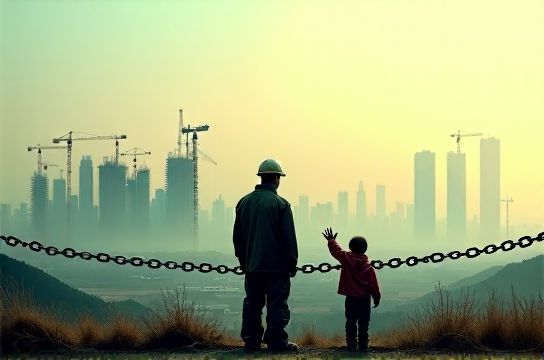
While skyscrapers rise and subways expand, millions of migrant workers — often called the 'floating population' — live on the fringes of these glittering metropolises. These laborers, mostly from rural provinces, power China’s construction boom and factory output, yet many lack full access to urban benefits due to the hukou (household registration) system.
Despite contributing billions to the economy, around 290 million migrant workers face restricted access to public schools, healthcare, and affordable housing. Their children, even if born in cities, may be forced to return to their parents’ hometowns just to attend high school and take the college entrance exam.
Family, Identity, and the Rural-Urban Divide
One of the most poignant social impacts is the fragmentation of families. It's common for parents to work in cities while leaving children and elderly relatives behind in villages. Over 60 million 'left-behind children' grow up without one or both parents — a silent crisis affecting mental health and education outcomes.
Meanwhile, rapid urbanization has triggered a cultural shift. Traditional village life, rooted in community and agriculture, is giving way to fast-paced, individualistic city living. For many young Chinese, identity is now split between ancestral roots and urban aspirations.
The Road Ahead: Inclusive Cities or Deepening Divides?
The Chinese government has recognized these challenges. Recent reforms aim to relax hukou restrictions in smaller cities and improve social services for migrants. The 14th Five-Year Plan (2021–2025) emphasizes 'people-centered urbanization,' focusing on livability, sustainability, and equity.
But progress is uneven. While cities like Chengdu and Hangzhou lead in inclusive policies, megacities remain highly selective. True integration requires not just policy changes, but a shift in social attitudes toward migrant populations.
Final Thoughts
China’s urbanization story isn’t just about concrete and cranes — it’s about people, dreams, and trade-offs. As the country moves toward a projected 75% urbanization rate by 2035, the real measure of success won’t be skyline height, but how fairly its benefits are shared.