
Neijuan and Its Impact on Chinese Workers
- Date:
- Views:234
- Source:The Silk Road Echo
In today’s fast-paced China, the term neijuan, or 'involution,' has become a buzzword echoing across offices, campuses, and social media. But what exactly is neijuan? And how is it reshaping the lives of Chinese workers? Let’s dive into this cultural phenomenon with real insights, data, and a touch of human storytelling.
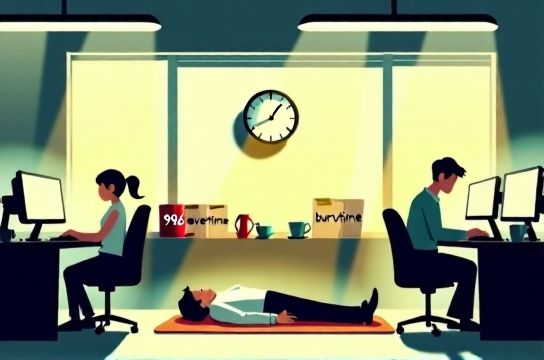
Neijuan describes a situation where individuals work harder and longer—not to get ahead, but just to stay in place. It's like running on a treadmill: exhausting, yet going nowhere. In workplaces from tech giants in Shenzhen to state-owned enterprises in Beijing, employees face mounting pressure to outdo each other, often at the cost of mental health and personal time.
A 2023 survey by China Labor Watch found that over 68% of urban white-collar workers report working beyond standard hours regularly. Even more alarming? Nearly 45% say they feel constant burnout. This isn’t just about long hours—it’s about a system where effort no longer equals reward.
The Neijuan Effect: By the Numbers
To understand the scale, here’s a snapshot of worker conditions in major Chinese industries:
| Industry | Avg. Weekly Hours | Burnout Rate (%) | Overtime Without Pay (%) |
|---|---|---|---|
| Tech | 52 | 58 | 40 |
| Finance | 48 | 51 | 33 |
| Education | 45 | 47 | 28 |
| Manufacturing | 50 | 55 | 62 |
As the table shows, neijuan isn’t isolated—it’s systemic. In tech, for example, the '996' culture (9 AM to 9 PM, 6 days a week) persists despite official pushback. Employees fear speaking up; promotions often go to those who visibly sacrifice personal life.
Why Does Neijuan Happen?
Several factors feed this cycle:
- Job Market Pressure: With millions graduating yearly, competition is fierce. Standing out means doing more.
- Performance Metrics: Many companies prioritize output over well-being, rewarding face time over innovation.
- Social Expectations: In a culture that values diligence, saying 'no' can be seen as laziness.
But here’s the twist: neijuan doesn’t boost productivity. A Peking University study found that after 45 hours/week, cognitive performance drops sharply. So we’re not just losing sleep—we’re losing smart work.
Fighting Back: The Anti-Neijuan Movement
Hope is brewing. Movements like Tang Ping (lying flat) and Jiǎo Zhēn (quiet quitting) are gaining traction. Younger workers are redefining success—choosing balance over burnout.
Some companies are listening. Huawei and Alibaba have launched wellness programs. Smaller startups promote 'no-meeting Wednesdays.' While change is slow, awareness is growing.
For workers, small acts matter: setting boundaries, using vacation days, and supporting peers. As one Shenzhen developer put it: 'I’m not lazy for leaving at 6. I’m sustainable.'
In the end, neijuan isn’t just a work issue—it’s a societal crossroads. Will China continue down the path of endless grind, or embrace a future where rest is respected? The answer may define a generation.