
Housing Pressures and City Living in China
- Date:
- Views:321
- Source:The Silk Road Echo
Living in China's megacities? Yeah, it’s flashy, fast, and full of opportunity—but let’s talk about the elephant in the room: housing pressure. From sky-high prices to tiny apartments, urban living here is equal parts dream and daily grind.
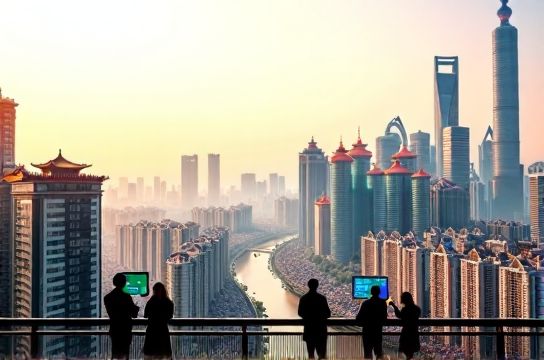
If you’ve ever scrolled through real estate apps in Beijing or Shanghai, you know what we mean. The numbers? They don’t lie. Let’s break it down with some real data and a bit of street-level truth.
The Skyrocketing Cost of Square Meters
In 2023, the average price per square meter in Shanghai hit around ¥68,000 (about $9,400). In Beijing, it wasn’t far behind at ¥62,000. Compare that to Chengdu at ¥18,000 or Xiamen at ¥42,000, and you start seeing the massive gap between tier-1 and tier-2 cities.
Here’s a snapshot of average housing prices across major Chinese cities:
| City | Avg Price (¥/m²) | Avg Price ($/m²) | Median Income (Annual) | Price-to-Income Ratio |
|---|---|---|---|---|
| Shanghai | 68,000 | 9,400 | ¥87,000 | 28.5 |
| Beijing | 62,000 | 8,600 | ¥91,000 | 26.8 |
| Shenzhen | 75,000 | 10,400 | ¥85,000 | 31.2 |
| Guangzhou | 40,000 | 5,500 | ¥82,000 | 19.5 |
| Chengdu | 18,000 | 2,500 | ¥68,000 | 8.0 |
Wait—what’s a price-to-income ratio? Simple: it’s how many years of average salary it would take to buy a home (assuming no savings, no loans, just cold hard cash). In Shenzhen? Over 31 years. That’s not just steep; that’s Mount Everest steep.
Rentals: Slightly More Bearable, But Still Painful
Most young professionals aren’t buying—they’re renting. And even that’s tight. A modest 50m² apartment in central Shanghai can set you back ¥8,000–12,000/month. That’s up to 50% of an average worker’s income.
And what do you get for that? Often a windowless room in a shared flat, or a converted office space with thin walls and thinner patience from neighbors.
Why Is It So Bad?
- Urban Migration: Over 60% of China’s population now lives in cities—a number that keeps growing. More people = more demand.
- Investment Culture: Homes are seen less as shelter and more as assets. Many families own multiple properties, driving prices up.
- Land Policies: Urban land is state-owned, and local governments rely heavily on land auctions for revenue. Limited supply + high bidding = inflated prices.
So… What’s the Solution?
The government’s pushing affordable housing projects and rent controls, especially in pilot zones like Hangzhou and Chongqing. There’s also been a rise in dorm-style co-living spaces targeting young workers—think private bedrooms, shared kitchens, lower costs.
Some companies even offer housing subsidies to attract talent. But let’s be real: until supply catches up with demand, city living in China will remain a financial marathon.
Bottom line? If you’re planning to move to a Chinese metropolis, budget wisely. Consider living further from the center, explore co-living, or maybe… learn to love small spaces. Because in cities like Shanghai and Shenzhen, your biggest luxury might just be personal space.