
Public Spaces and Social Interaction in China
- Date:
- Views:243
- Source:The Silk Road Echo
In modern China, public spaces are far more than just parks and plazas—they’re vibrant stages where culture, community, and daily life collide. From morning tai chi sessions to evening square dances, these shared environments foster deep social connections that shape urban identity. Let’s dive into how public spaces fuel social interaction across Chinese cities.
The Heartbeat of Urban Life
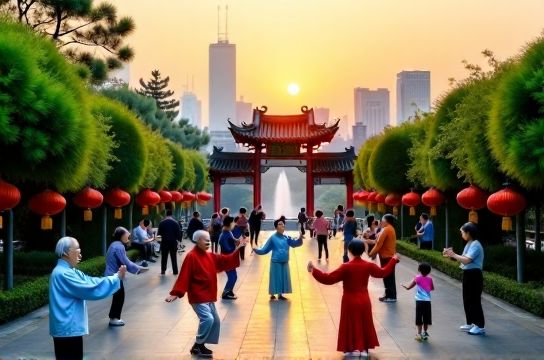
Walk through any major Chinese city at dawn, and you’ll witness a familiar scene: elderly residents practicing tai chi in neighborhood parks, families strolling along tree-lined boulevards, or groups dancing to upbeat pop music in open squares. These aren’t random acts—they reflect a cultural rhythm rooted in collective well-being and communal harmony.
According to the Ministry of Housing and Urban-Rural Development, Chinese cities have increased per capita public green space from 7.4 m² in 2000 to over 15 m² in 2023. This expansion reflects a national push toward livable cities, with Beijing and Shanghai leading in accessibility—over 90% of residents live within a 10-minute walk of a park.
Square Dancing: More Than Just Exercise
You can’t talk about social interaction in China without mentioning square dancing. Often dismissed by outsiders as noisy or chaotic, this grassroots phenomenon involves an estimated 60 million middle-aged and retired women nationwide. It’s not just fitness—it’s friendship, expression, and empowerment.
Beyond the music, square dancing creates informal support networks. A 2022 survey by Peking University found that 78% of participants reported improved mental health and stronger neighborhood ties.
| City | Per Capita Green Space (m²) | Population Using Public Parks Weekly | Main Activities |
|---|---|---|---|
| Beijing | 16.3 | 89% | Tai chi, dancing, chess |
| Shanghai | 15.8 | 91% | Dancing, walking, calligraphy |
| Guangzhou | 17.1 | 85% | Morning exercises, family outings |
| Chengdu | 18.4 | 93% | Tea gatherings, mahjong, dancing |
Design That Encourages Connection
What makes Chinese public spaces so socially effective? It’s intentional design. Benches are arranged in circles, not rows. Pavilions host spontaneous opera performances. Even street lamps are placed to extend usable hours. Cities like Shenzhen integrate ‘5-minute community life circles’—ensuring essentials and gathering spots are always nearby.
Younger generations are also reclaiming public areas. Pop-up markets, outdoor yoga classes, and digital art installations in places like Hangzhou’s West Lake show how tradition and innovation coexist.
Challenges & The Road Ahead
Of course, tensions exist. Noise complaints from square dancers and gentrification pushing out local hangouts are real issues. But cities are responding—designated quiet zones, time-limited dance areas, and participatory planning help balance needs.
The future? Smarter, greener, and more inclusive spaces. Wuhan’s post-pandemic park upgrades and Xi’an’s cultural corridor projects highlight a shift toward emotionally intelligent urban design.
In China, public space isn’t just about concrete and trees—it’s where society breathes, bonds, and evolves. Whether you’re joining a dance circle or sipping tea under a banyan tree, you’re part of something bigger: the living fabric of community life.