
Urbanization at a Crossroads: Migrant Workers and the Soul of Chinese Cities
- Date:
- Views:273
- Source:The Silk Road Echo
Let’s talk about China’s cities — those towering skylines, buzzing subways, and neon-lit streets. They’re impressive, right? But behind the glitz, there’s a quiet force keeping these urban giants alive: migrant workers. Yeah, the folks who move from rural villages to big cities chasing better lives. They build the skyscrapers, deliver your dumplings, clean office towers, and keep the wheels turning. But here’s the real tea: as China’s urbanization hits a crossroads, these workers are more crucial than ever — not just for labor, but for the soul of the city.
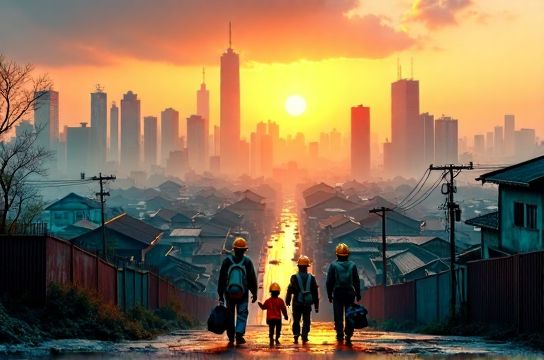
Urbanization in China has been wild. Over the past few decades, hundreds of millions have moved to cities. It’s one of the biggest human migrations in history. And sure, GDP went up, infrastructure exploded, and cities like Shenzhen transformed from fishing villages to tech hubs overnight. But now? Growth is slowing. Real estate’s wobbling. Local governments are strapped. The old model — build, build, build — isn’t cutting it anymore.
So what’s next? Well, smart leaders are starting to realize that sustainable urbanization isn’t just about taller buildings or wider highways. It’s about people. And right now, nearly 300 million migrant workers live in limbo. They work in cities but often can’t access public schools for their kids, affordable housing, or proper healthcare — thanks to the hukou (household registration) system. Imagine grinding 12-hour shifts, sending money home, and still being treated like an outsider. That’s the reality for so many.
But here’s the twist: when cities finally embrace these workers — give them rights, stability, a sense of belonging — magic happens. Families settle. Kids grow up educated and connected. Communities get stronger. Consumption rises. A stable domestic market starts to form. That’s the golden ticket for China’s next growth phase — not exports, not construction, but internal vitality.
Some cities are already catching on. Places like Chengdu and Hangzhou are easing hukou restrictions, expanding social services, and investing in inclusive urban planning. They’re saying, ‘You built this city? Cool. Now let’s make it yours.’ And guess what? These cities are seeing happier citizens, lower turnover, and more resilient economies.
The bottom line? Urbanization isn’t just a construction project — it’s a human one. If China wants vibrant, future-ready cities, it needs to stop seeing migrant workers as temporary help and start treating them as the heart and soul of urban life. Because a city without belonging isn’t really a city at all.
So yeah, the skyline matters. But the stories in the streets? Those matter way more.