
Traditional Values vs Modern Life in Chinese Society
- Date:
- Views:319
- Source:The Silk Road Echo
In today’s fast-paced China, where skyscrapers rise beside ancient temples, a fascinating cultural tug-of-war is unfolding: traditional values versus modern life. As the country rockets toward technological and economic dominance, many Chinese citizens are asking: Can filial piety, harmony, and collectivism survive in an age of individualism, digital hustle, and urban loneliness?
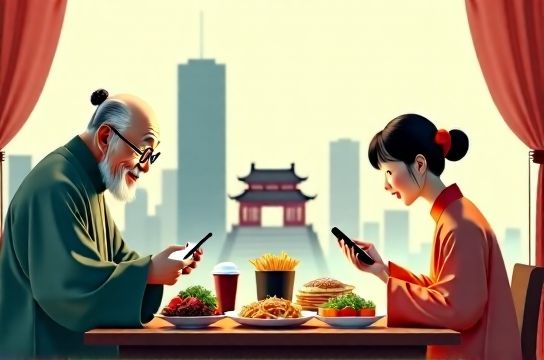
The answer? It’s complicated — but incredibly revealing.
The Clash of Two Worlds
For centuries, Confucian ideals shaped Chinese society. Respect for elders, family loyalty, and social harmony weren’t just nice ideas — they were the foundation of daily life. But now, with over 70% of China’s population living in cities (up from just 20% in 1980), traditional village-style communities have given way to high-rise apartments and 9-to-9 work cultures.
Young professionals in Beijing or Shanghai often live far from their parents, juggling career pressure and rising housing costs. A 2023 survey by Peking University found that 62% of urban youth feel guilty about not visiting their parents enough, yet only 28% manage monthly visits.
Family Dynamics in Transition
One of the most visible shifts? The changing role of the family. In rural areas, three-generation households are still common. But in cities, nuclear families or even single-person homes are on the rise.
| Household Type | Rural (%) | Urban (%) |
|---|---|---|
| Three-generation | 45 | 18 |
| Nuclear Family | 38 | 62 |
| Single-person | 8 | 24 |
Data source: National Bureau of Statistics, 2022
This shift isn’t just logistical — it’s emotional. The traditional expectation of xiao (filial piety) clashes with modern realities. How can you care for aging parents when you’re working 70-hour weeks and saving for a mortgage?
Digital Life vs. Face-to-Face Harmony
Then there’s technology. Platforms like WeChat keep families connected, but sometimes in shallow ways. Sending a red envelope during Spring Festival? Great. But is it a substitute for sitting together, sharing a meal, telling stories?
A 2024 study by Tsinghua University showed that while 94% of families use WeChat daily, only 37% report meaningful conversations weekly. That gap speaks volumes.
Marriage & Career: Red Packets vs. Personal Freedom
Remember the pressure to marry by 30? Known as sheng nu (“leftover women”) or guang gun (“bare branches”), singles face intense social scrutiny. Yet, marriage rates have dropped for eight consecutive years, while divorce rates climb.
Why? Young people value self-development. A Zhihu poll revealed that 76% of millennials prioritize career growth over early marriage. Traditional expectations are bumping hard against modern ambitions.
So… Is Tradition Dying?
Not exactly. Instead, it’s evolving. Many young Chinese aren’t rejecting tradition — they’re redefining it. They may not live with parents, but they send money home. They skip Lunar New Year dinners sometimes, but stream them via video call. They delay marriage, but still honor ancestors during Qingming Festival.
In short: tradition isn’t vanishing — it’s going digital, flexible, and personal.
The Way Forward
The future of Chinese society likely won’t be purely traditional or modern — it’ll be a hybrid. Imagine AI chatbots reminding you to call Mom, or smart homes designed for multi-generational living. The soul of tradition can endure, even as its form changes.
As one Shanghai college student put it: “I respect my parents’ values, but I also need to live my truth. Balance is everything.”
And maybe, just maybe, that balance is the new Chinese dream.