
Living the Slow Life Amid Chinese Workaholic Culture
- Date:
- Views:214
- Source:The Silk Road Echo
In a country where 996—working from 9 AM to 9 PM, six days a week—has become a normalized mantra in tech hubs like Beijing and Shenzhen, choosing to live slowly isn’t just refreshing; it’s revolutionary. Yet, a quiet counter-movement is blooming across China: young professionals are rediscovering the art of slowness, trading overtime for tea ceremonies, and KPIs for countryside weekends.
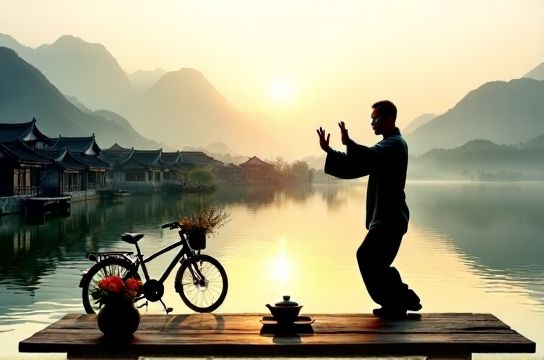
According to a 2023 survey by Zhaopin.com, over 68% of urban white-collar workers report chronic work-related stress, with nearly half considering early retirement or career shifts to escape burnout. But instead of fleeing entirely, many are embracing what’s being called the màn shēnghuó (慢生活) lifestyle—slow living with Chinese characteristics.
The Rise of Mindful Escapes
Cities like Chengdu and Dali have become sanctuaries for this cultural pivot. In Dali, nestled by Erhai Lake in Yunnan, rental listings for small courtyard homes jumped by 40% in 2022 as digital nomads and disillusioned office workers relocated. These aren’t retirees—they’re often 30-somethings running online businesses, writing novels, or teaching yoga.
Chengdu, known for its laid-back tea culture, saw a 27% increase in cafés promoting ‘no-laptop zones’—spaces explicitly designed to discourage work and encourage conversation.
Slow Living by the Numbers
Here’s how the slow life compares to traditional urban grind:
| Metric | Urban Workaholic (Beijing/Shanghai) | Slow Lifestyle (Dali/Chengdu) |
|---|---|---|
| Avg. Work Hours/Week | 55–70 | 25–35 |
| Monthly Rent (1BR) | ¥8,000–12,000 | ¥2,500–4,000 |
| Daily Commute Time | 90 mins | 20 mins |
| Self-Reported Happiness Index | 5.8 / 10 | 7.9 / 10 |
Sources: National Bureau of Statistics, China Urban Development Report 2023
Practical Tips to Embrace Slowness in China
- Start Small: Swap one overtime night for a walk in the park or a calligraphy class. Cities like Hangzhou offer free community tai chi sessions at West Lake every morning.
- Reclaim Weekends: Skip the shopping malls. Try a two-day retreat in Wuzhen or Yangshuo—places where time moves with the rivers.
- Digital Detox: Join the growing trend of ‘phone-free Sundays.’ Even WeChat, the omnipresent app, sees 18% lower usage on Sundays among slow-life advocates.
- Eat Like a Local: Trade fast food for slow food. Support farmers' markets in Kunming or Xi’an’s ancient Muslim Quarter, where meals are made, not microwaved.
The slow life isn’t about laziness—it’s about intentionality. As one expat-turned-tea-farmer in Fujian put it: “I used to measure success by salary. Now I measure it by sunrise.”
In a society that glorifies hustle, slowing down becomes an act of courage. And perhaps, in these quiet moments, China is rediscovering its soul—one mindful breath at a time.