
Local Perspective China on Education and Inequality
- Date:
- Views:283
- Source:The Silk Road Echo
When it comes to education in China, the picture is as complex as a spicy Sichuan hotpot — rich, layered, and sometimes hard to swallow. From bustling Beijing to rural Yunnan, the gap between urban and rural education isn’t just noticeable — it’s staggering. Let’s dive into what’s really going on behind those classroom doors.
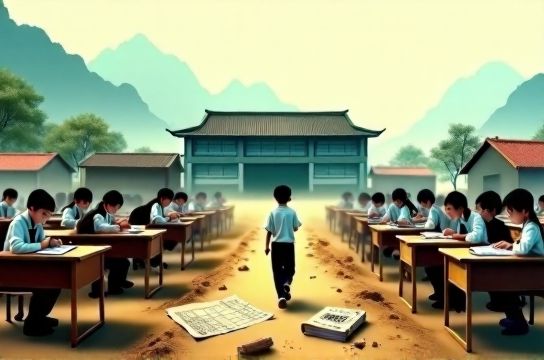
The Urban Advantage: More Than Just Better Schools
In first-tier cities like Shanghai and Shenzhen, students enjoy well-funded schools, experienced teachers, and access to cutting-edge tech. But head to a village in Gansu province, and you’ll find classrooms with cracked walls and one textbook shared between three kids. According to UNESCO, urban students are 3.5 times more likely to attend university than their rural peers.
The Gaokao Gamble: One Test to Rule Them All?
The gaokao, China’s national college entrance exam, is often seen as the great equalizer. In theory, anyone can rise through sheer effort. But reality? Not so much. A 2022 study by Peking University found that only 12% of rural students scored high enough to enter top-tier universities, compared to 48% from urban families.
| Region | High School Enrollment Rate (%) | University Admission Rate (%) | Average Annual Education Spending per Student (RMB) |
|---|---|---|---|
| Beijing | 98 | 76 | 28,000 |
| Guizhou (Rural) | 74 | 29 | 6,500 |
| Shanghai | 97 | 73 | 26,800 |
| Gansu (Rural) | 68 | 22 | 5,900 |
Hukou Hassles: The System That Holds Back Millions
The hukou system — China’s household registration policy — is a major roadblock. Migrant workers’ kids often can’t enroll in city schools without local residency. Result? Over 10 million rural-urban migrant children attend underfunded ‘migrant schools’ with limited curriculum and zero access to the city’s gaokao.
Private Tutoring: The Hidden Inequality Engine
Remember when cram schools were banned in 2021? Yeah, they didn’t really go away. Wealthy families just moved tutoring underground — some paying up to 80,000 RMB/year for elite one-on-one coaching. Meanwhile, rural families spend less than 2,000 RMB annually on extra learning. Talk about an uneven playing field.
What’s Being Done? And Is It Enough?
The government’s pouring money into rural education — over 300 billion RMB since 2018. There are new teacher incentive programs and digital classrooms being rolled out. But progress is slow. Infrastructure helps, but it can’t fix deep-rooted bias or the cultural weight placed on urban academic prestige.
The Bottom Line
China’s education system promises fairness, but delivers disparity. Until the hukou barrier falls and funding reaches every village school, true equality remains a distant dream. For now, your zip code still determines your future — more than your talent.